Last updated November 22, 2026
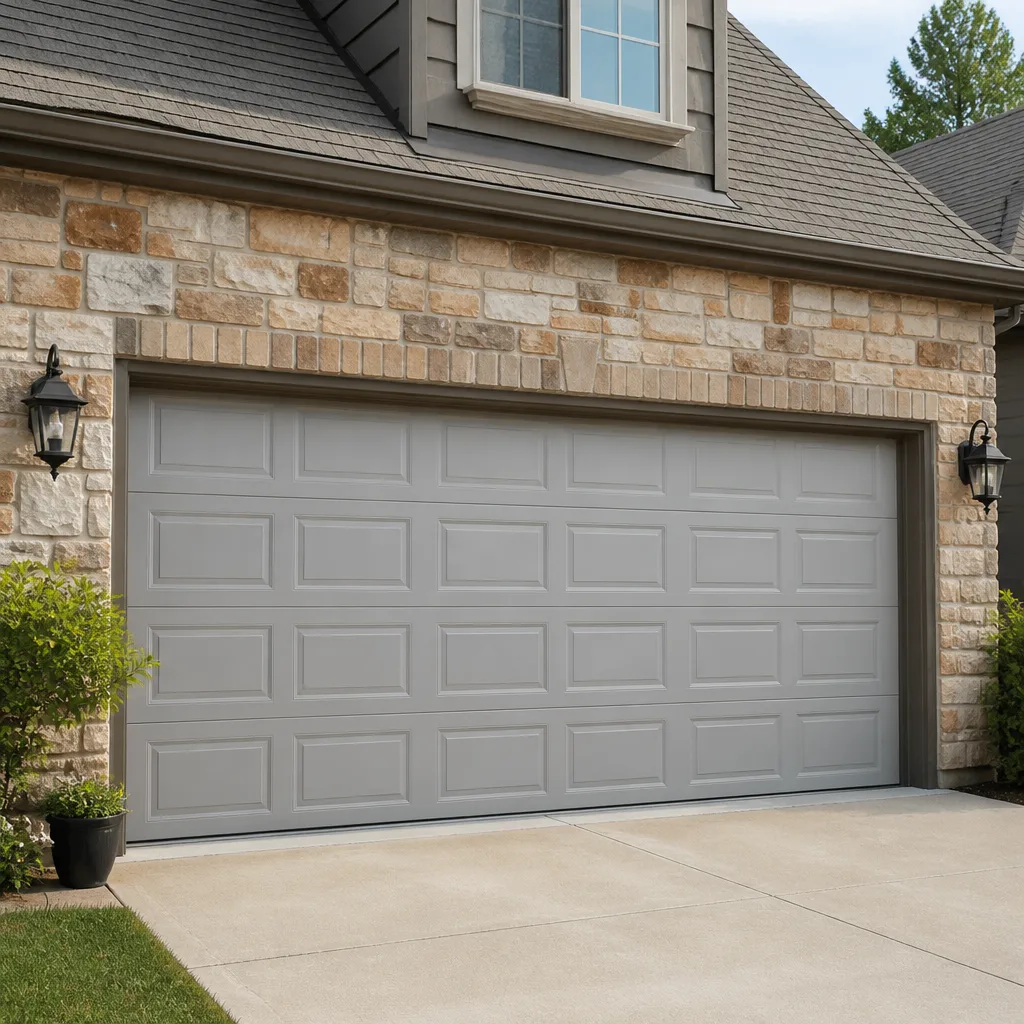 Raised-panel steel
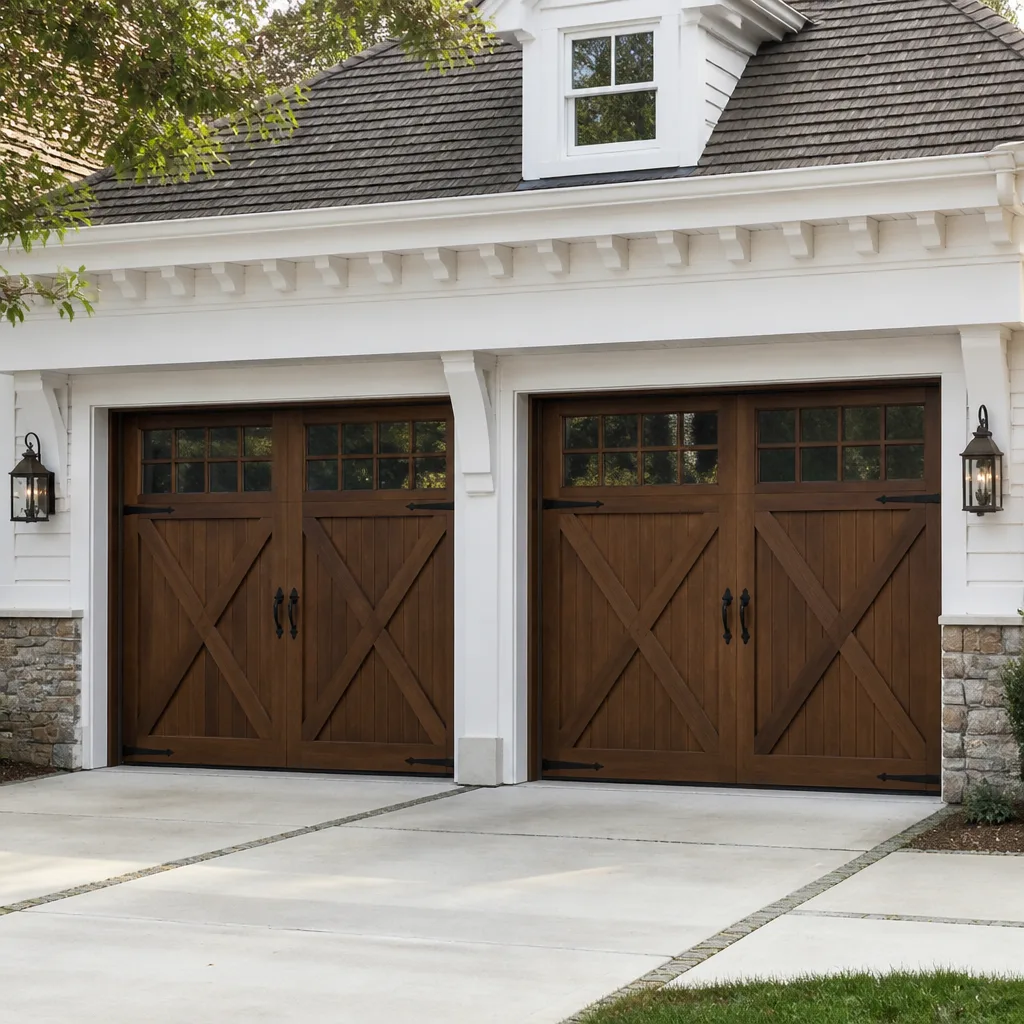 Carriage house
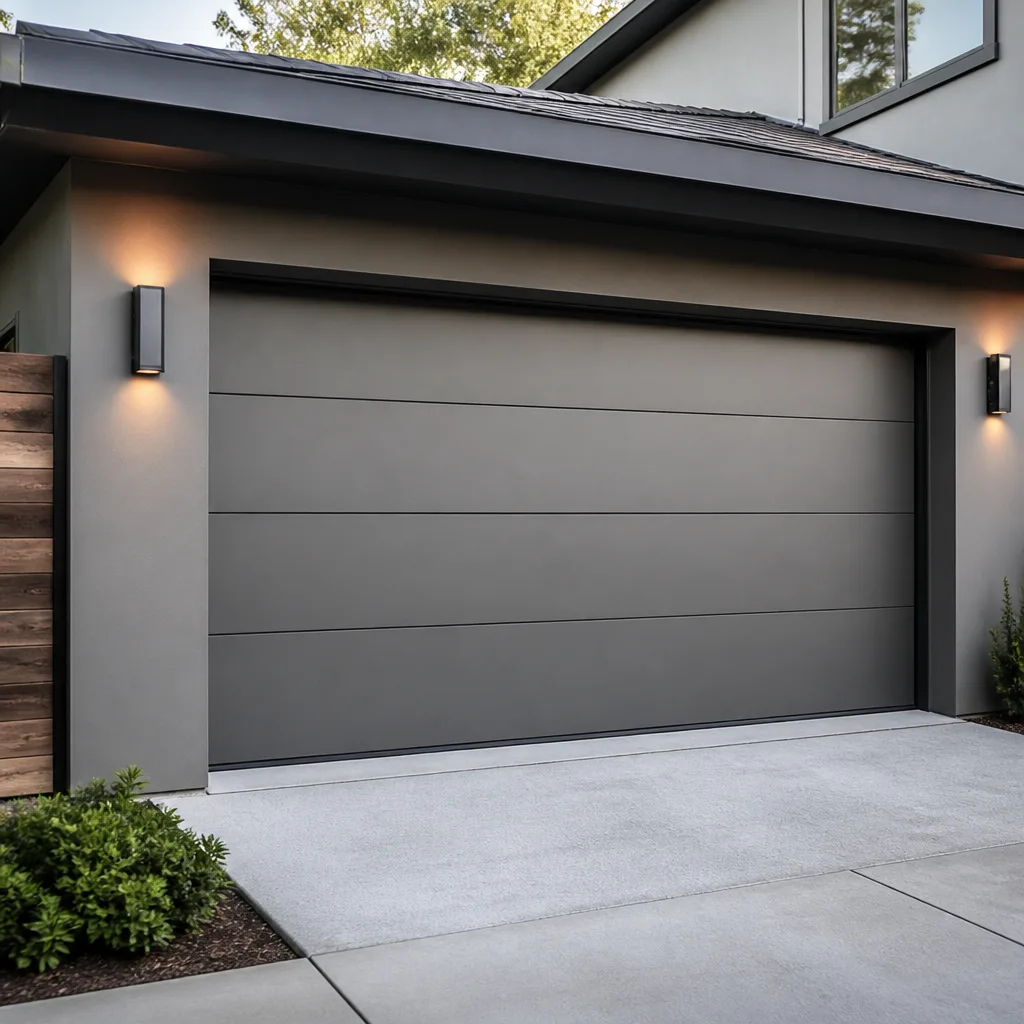 Modern flush
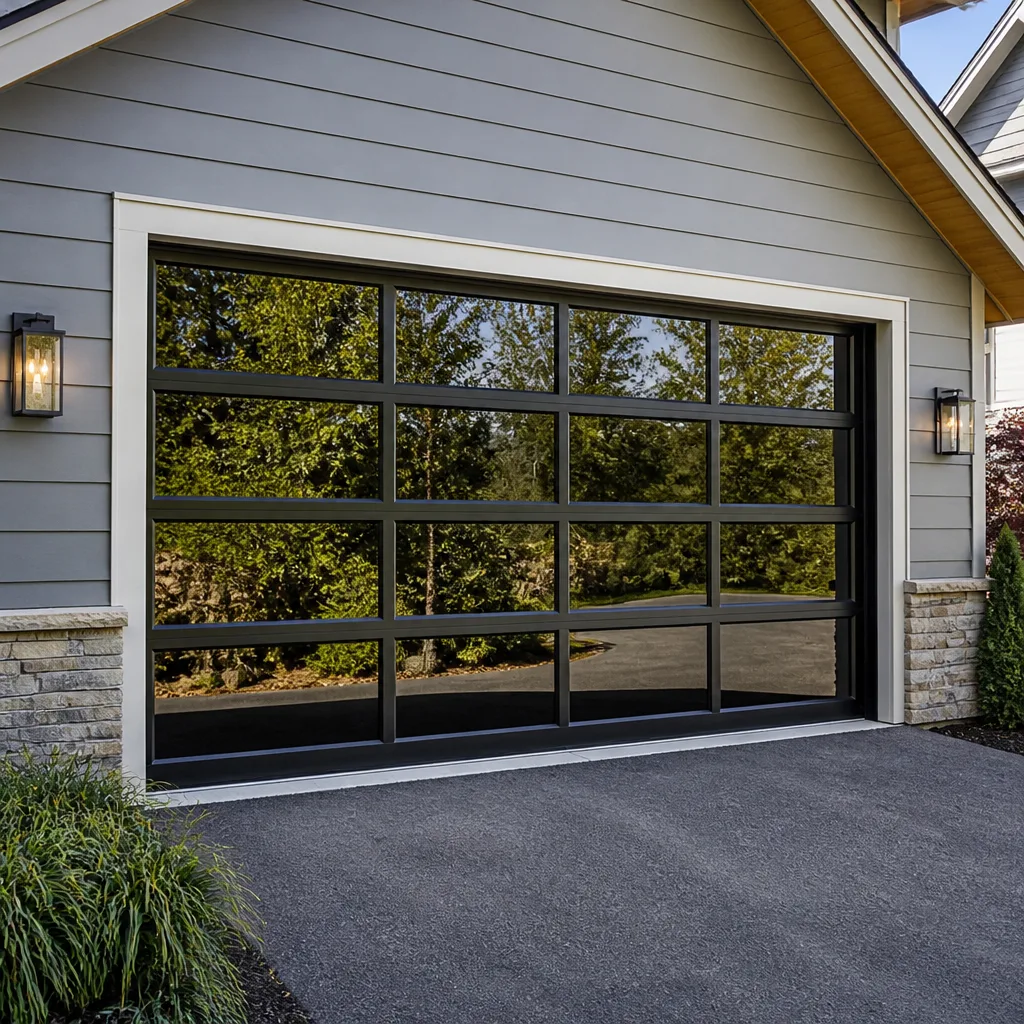 Full-view glass
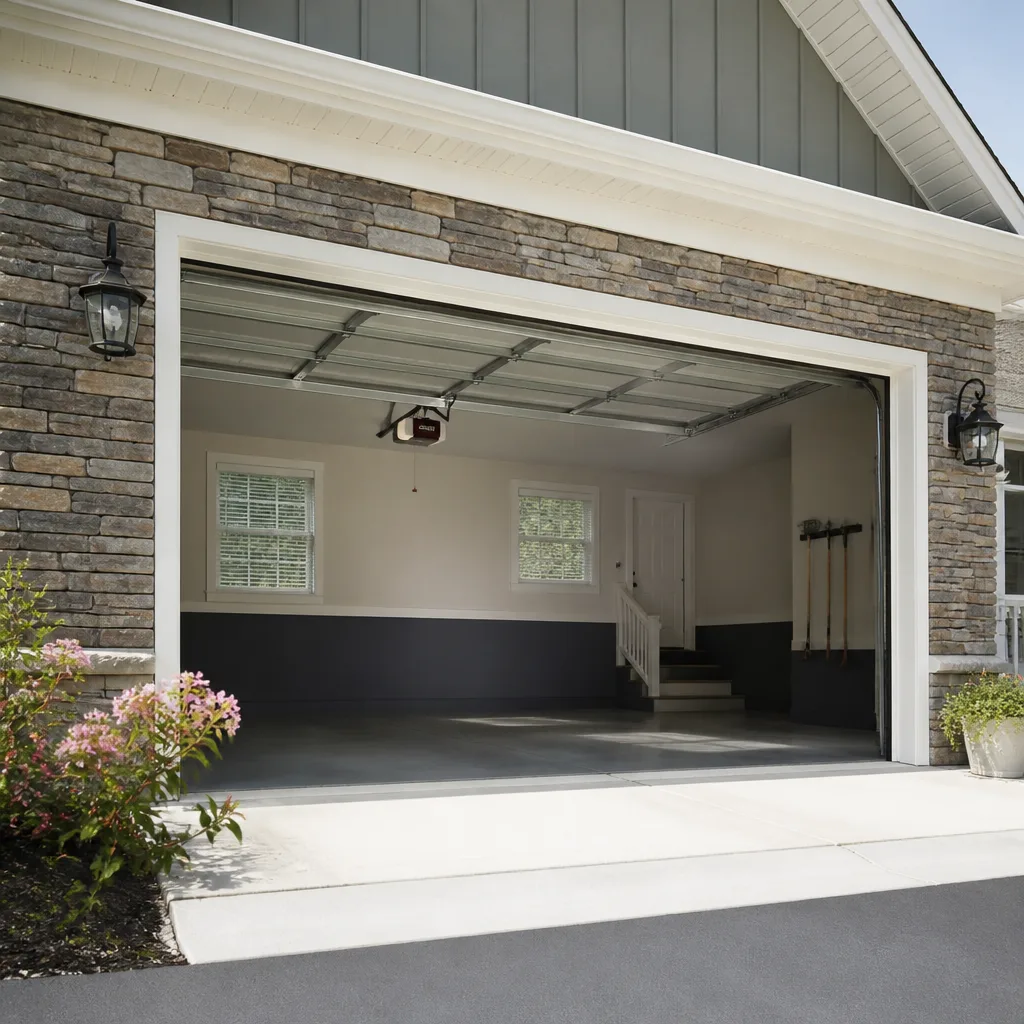 LiftMaster openers
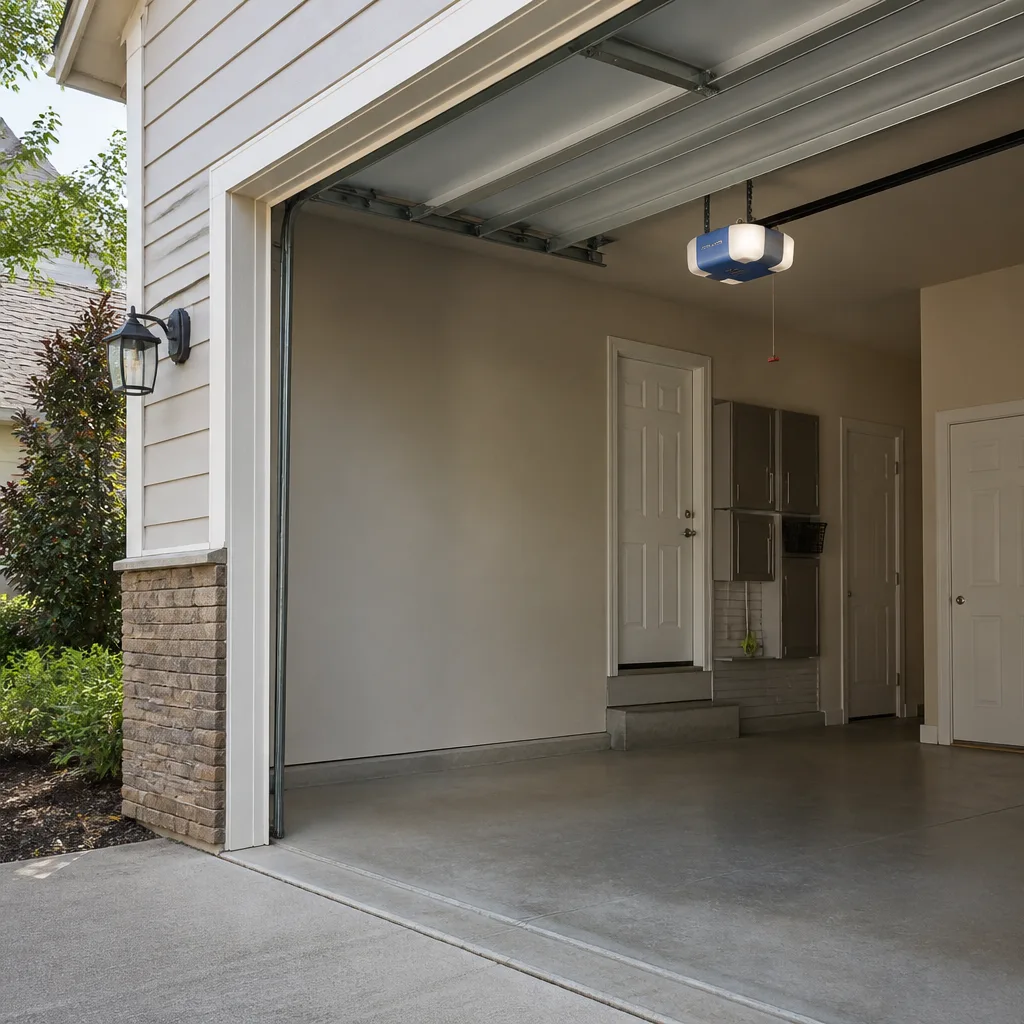 Chamberlain openers
Full 25-point door and opener safety check with every visit - springs, cables, rollers, tracks, and your LiftMaster or Chamberlain opener included
You get a price before we start. It does not change when the pro arrives.
Get your free estimateDIY vs Professional Garage Door: The Lawrence Homeowner’s Decision Guide
Torsion springs store enough mechanical energy to break a wrist, shatter safety glasses, and in documented cases cause fatalities. That’s not a scare tactic, it’s physics. Which means the real question for a Lawrence homeowner standing in front of a door that won’t open isn’t whether you’re handy. It’s whether that particular repair belongs on a DIY list at all. Some garage door work is genuinely safe for a careful homeowner with a Saturday morning and a socket set. Other work isn’t, no matter how many videos you watch. This guide draws that line clearly, task by task, so you can handle the safe fixes yourself and know exactly when to hand it off.
Quick Answer
In Lawrence, most garage door problems split cleanly: lubrication, sensor alignment, remote reprogramming and visual inspections are safe to do yourself, while spring replacement, cable work, panel replacement and any job involving the torsion assembly belong to a trained professional. The dividing line isn’t your skill level or confidence, it’s the injury risk built into high-tension parts. If your door won’t open because a spring snapped or a cable is loose, stop and call a pro rather than experimenting.
Styles & brands we work with
- Raised-panel steel
- Carriage house
- Modern flush
- Full-view glass
- LiftMaster openers
- Chamberlain openers
Table of Contents
- Where the Safe DIY Line Actually Falls in Lawrence
- What You Can Genuinely Safely Fix Yourself
- The Repairs You Shouldn’t Touch, Regardless of Confidence
- How to Diagnose the Problem Before You Call Anyone
- What DIY Garage Door Kits Sold Online Don’t Include
- The Real Cost of a DIY Attempt That Fails
- The Liability and Insurance Angle for Lawrence Homeowners
- Why Lawrence’s Housing and Weather Change the Equation
Where the Safe DIY Line Actually Falls in Lawrence
The DIY-versus-professional question gets framed as a skill judgment, but in our experience it’s really a physics and liability judgment. A garage door is the heaviest moving assembly in most Lawrence homes. A single-car sectional door usually weighs between a hundred and a few hundred pounds depending on material and insulation, and it’s held up entirely by springs under tension and cables running through pulleys. That’s why the dividing line isn’t “am I capable” but “what happens if this slips.”
Where the line sits matters more in Lawrence than in newer cities. A large share of the housing stock here sits in triple-decker neighborhoods and older single-family homes where the door frames are decades old and often slightly out of square. That changes how forgiving a repair is. A sensor bracket that would bolt on clean in a newer home may fight you on a frame that settled years ago. A roller swap might reveal worn tracks underneath.
We break every task into three buckets, and this is the framework the rest of this guide follows:
- Safe DIY: lubrication, sensor alignment, remote and keypad reprogramming, replacing batteries, light cleaning and visual inspection.
- Judgment call: roller replacement, weather stripping, swapping a remote, tightening visible brackets. Doable, but with caveats.
- Professional only: spring replacement, cable work, torsion assembly adjustments, track realignment after impact, and any panel or structural repair.
One more thing worth naming up front: the garage door is the largest opening in your house. Getting it wrong rarely stays a small problem. A mis-set sensor keeps the door from closing at all, and a botched spring attempt can leave the door stuck open with your home exposed until someone comes out. That’s why knowing the line matters even when you’re confident.
What You Can Genuinely Safely Fix Yourself
A surprising number of garage door complaints come down to lubrication, sensor alignment, or a remote that lost its programming. Those are the jobs we’d happily tell a Lawrence homeowner to do on their own. They involve no stored mechanical energy and nothing that can snap under tension.
Here’s the safe list, and it covers most non-emergency calls we get:
- Lubricate the moving parts. Hinges, rollers, the tracks themselves, and the spring (with a proper garage door lubricant, not WD-40). A little goes a long way and this alone eliminates a large share of noisy doors.
- Align the safety sensors. If your door reopens as it closes, the two sensors near the floor are probably misaligned or blocked. Wipe the lenses and check that the indicator lights on both are solid.
- Reprogram a remote or keypad. If you have a LiftMaster, Chamberlain or Genie opener, the manual or the brand’s instruction sheet will walk you through it in a few minutes.
- Change opener batteries. A remote that works intermittently is almost always a battery, not a broken opener.
- Visual inspection. Look for frayed cables, worn rollers, bent tracks, and gaps at the door edges. You’re looking, not touching.
- Clear the tracks of debris. A small stone or a build-up of grit in the track stops the door cold. A rag and a small brush fix it.
What separates these from unsafe work is that none of them put your hands near the spring, the cable, or any load-bearing part of the door’s weight system. They’re maintenance, not repair. That’s the dividing line. If the answer to “what holds this door up” is part of the task, it’s not a DIY task.
If lubrication and sensor work still leave your door misbehaving, it’s worth getting it looked at properly rather than escalating your own repair. That’s the point where a garage door repair visit usually saves time and money.
The Repairs You Shouldn’t Touch, Regardless of Confidence
Torsion springs and the cables they tension are the one part of a garage door where confidence genuinely doesn’t matter. A torsion spring under normal residential tension can release enough stored force to break a wrist, launch a winding bar through drywall, or worse, and that release can happen without any warning. Working on one without the correct winding bars, the right technique, and standing out of the release path of the spring is how serious injuries happen. We do this work every week and still treat it as the highest-risk job in the trade.
That’s why these belong to a professional, and the list is firmer than most people expect:
- Spring replacement, both torsion and extension. One broken spring almost always means the pair is at the same age, and we normally replace the pair so the door stays balanced.
- Cable replacement or tightening. Cables are under the same tension as the springs and can whip if released.
- Torsion tube or drum adjustments. Anything that changes how the spring load is transferred to the door.
- Structural panel repair. A cracked panel can weaken the door’s balance and should be assessed by someone who knows whether it’s repairable or needs replacement.
- Track realignment after an impact. If a car or a fallen branch bent the tracks, the door’s whole geometry is off and the spring load may be uneven.
One honest note about DIY kits sold online and garage door parts on a hardware store shelf: they usually don’t include the safety equipment a real spring job requires, and they rarely mention that the winding bars you need to work safely are sold separately. They also don’t cover the balancing check that comes after. Someone has to verify the door stays in place at mid-travel, a check that’s easy to skip and that fails quietly for weeks before the door starts jumping. That’s not a dig at the buyer. It’s just how the product is packaged.
When it’s a spring, it’s worth the call. Our garage door spring repair service exists precisely because this is the one repair we never want a homeowner trying at home.
How to Diagnose the Problem Before You Call Anyone
You can save a service visit and often a whole call by identifying the problem category before picking up the phone. The goal isn’t to fix anything, it’s to describe what’s happening accurately so whoever comes out brings the right parts and the right knowledge.
Work through this checklist and note what you see:
- Does the opener run but the door not move? That’s usually a broken spring, a disconnected drawbar, or a stripped gear in the opener. Note the sound the opener makes when you press the button.
- Does the door move but the opener not run? That points to a remote, wall button, safety sensor, or power issue, not the door itself.
- Does the door go up but not all the way down? Safety sensors, misaligned tracks, or an obstruction in the path.
- Is the door visibly uneven, sagging on one side? A broken spring, a loose cable, or a bent track. This one is a stop-doing-DIY signal.
- Is it noisy? Lubrication, worn rollers, or loose brackets. Usually the safest category to handle yourself.
- Did the door hit something? Any impact means a visual assessment of tracks, panels, and cables before you run it again.
Write down the brand of your opener if you can read it off the housing, and your door’s material. That detail helps whoever you call know whether they’re dealing with a LiftMaster or a Chamberlain unit, a wood-panel Clopay door, or a steel one. It also helps when you call garage door opener repair, because opener issues have their own diagnostic path that’s separate from door problems.
What DIY Garage Door Kits Sold Online Don’t Include
Online DIY kits are popular, and some are genuinely fine for the safe bucket of tasks. But the gap between what a kit contains and what a real repair requires is where a lot of Lawrence homeowners get stuck. Kits are built for a clean, standard installation, not a twenty- or thirty-year-old door frame in an older Lawrence home.
Here’s what most kits leave out:
- Winding bars for torsion springs are almost never included and are sold separately. Without them, the job can’t safely be done.
- A door-balance check after replacement. The kit ships with the spring, but the post-install check that confirms the door holds at mid-travel is on you.
- Rollers matched to the age and weight of the door. Older doors need specific roller profiles, and kits often ship a universal size.
- Shim and adjustment hardware for frames that have settled. A slightly out-of-square opening is common in Lawrence’s older homes, and a kit assumes the frame is true.
- Instructions that account for your door’s geometry, not the generic geometry of a standard panel.
- Clear guidance on when to stop. Kits tend to assume the repair is proceeding to completion. Real repairs sometimes reveal other issues that change the plan.
What that means in practice: a kit can work fine for a direct swap on a door that’s in reasonable condition, but if anything about your existing door is unusual, the kit’s assumptions break down. That’s more likely in Lawrence’s older housing stock than in newer construction. If your opener is a Chamberlain or Genie unit that’s more than a few years old, the same logic applies to opener replacement parts, which are often specific to the model.
It’s also worth matching the part to the job. A kit aimed at a one-size-fits-all spring isn’t going to match the load rating of the door you have. A pro checks that.
The Real Cost of a DIY Attempt That Fails
The parts cost of a DIY garage door repair is often low. The cost of getting it wrong isn’t, and the number people miss is the emergency call rate that often applies when a door is left inoperable. A door that’s stuck open after an incomplete spring job or a bad roller swap turns a planned repair into an urgent one, and emergency timing usually costs more than a scheduled visit.
A realistic view of the cost categories:
- Planned repair: the lowest rate. You pick the time, the technician brings the right parts, and the door is back in service on the first visit.
- Emergency repair: a higher rate because someone’s coming out on short notice, and that’s true of any trade.
- Second attempt: when a homeowner part-fixes a problem and hands it off, the technician has to diagnose what was already tried. That can add a diagnostic step.
- Follow-on damage: a botched spring attempt can load the door unevenly, which wears the opener gear, the cables, and the rollers faster. Those aren’t the cost of the spring, they’re the cost of the runner-up problem.
The specific dollars vary by the job and the door, so we don’t hold a price list. What we do hold to is a written estimate before any work begins, so you know the cost before the first turn of a wrench. That’s the one real safeguard against the invoice-scares-me fear that keeps a lot of people stuck in the DIY loop longer than they should be.
When you call, ask for an exact figure. We’ll give you a written one. Estimates are free, at (877) 492-1952.
The Liability and Insurance Angle for Lawrence Homeowners
Unpermitted DIY structural work on a garage door can complicate a homeowner’s insurance claim if something goes wrong. That’s not a scare statement, it’s a practical reality of how insurers handle claims tied to work that wasn’t done to code, or was done without the permits the city requires. Lawrence’s building department sets its own permit requirements, and for structural work on a garage opening you should check with them directly before assuming a permit isn’t needed.
The specific concerns we’d flag:
- Permits for structural changes to a garage opening vary by municipality and by scope. Ask Lawrence’s building department what applies to your job rather than assuming.
- Documentation of a completed repair matters if a claim arises later. A written estimate and a written record of what was done help.
- Insurance carriers may ask who performed the work if a claim is filed. That’s not a reason to avoid doing things yourself, it’s a reason to know which tasks the insurer expects a professional to handle.
- Resale disclosures can surface unpermitted structural work years after the fact. That’s the kind of thing that’s easier to avoid than to untangle.
None of this means every garage door job needs a permit. Sensor repairs and roller swaps don’t. Spring replacement usually doesn’t either, but it’s worth confirming the rule for your specific scope with the city. What we’d never suggest is doing structural work and hoping it doesn’t come up.
Why Lawrence’s Housing and Weather Change the Equation
Lawrence’s winters are hard on garage doors in ways that make DIY riskier than the same job in a milder climate. Freeze-thaw cycles work on the springs, cables and tracks, and a door that’s been through a dozen winters has metal fatigue that isn’t visible from the outside. Temperatures drop into the teens for stretches, and the metal parts of the door expand and contract with the temperature swings. That’s the reason we see more broken springs in the cold months than any other time of year.
The housing stock matters too. Lawrence’s older homes, in neighborhoods like the Tower Hill area and along the Merrimack, often have original or decades-old door frames. Slightly out-of-square openings, settled slabs, and doors that have been repaired by a previous owner are all common. Those conditions make a repair that looks straightforward on a new door much less predictable on an older one.
What that means for the DIY decision:
- If your door is more than a few winters old and the spring hasn’t been replaced, treat any spring symptom as a call-a-pro signal, even if it feels minor.
- Cold weather is when to lubricate most carefully, not when to skip it. A dry track in freezing temperatures makes rollers drag and strains the opener.
- Any door that’s been repaired without a record is worth a professional inspection before a DIY attempt, because you can’t see what someone else did.
If your door has been through more winters than you can count and you’ve never had it checked, a professional assessment is cheaper than a surprise. We work on the door you have, whatever brand it is.
Common Mistakes to Avoid
- Trying a spring job with the wrong bars. Standard tools and improvised bars don’t hold a torsion spring under tension. It’s the most common serious injury we’d steer anyone away from.
- Lubricating a spring with oil or WD-40. It attracts grit and dries out the spring over time. Use a proper garage door lubricant and apply it sparingly.
- Trusting a sensor alignment without testing it. The indicator lights on both sensors should be solid, and the door should reverse when a hand is waved through the beam. If either doesn’t happen, the apparent fix isn’t a fix.
- Skipping the door balance check after a part swap. Even a roller or cable job can leave the door slightly off-balance, which wears the opener faster.
- Assuming a kit will fit an older Lawrence door frame. Settled or out-of-square openings are common here, and a generic kit assumes a true frame.
- Running a door with a visibly bent track. A bent track strains the rollers and can force the door out of alignment. Stop and get it looked at.
- Waiting until a door is stuck open to schedule a repair. The emergency rate usually costs more than the planned one, and a door stuck open overnight is a security concern on any street.
See the difference
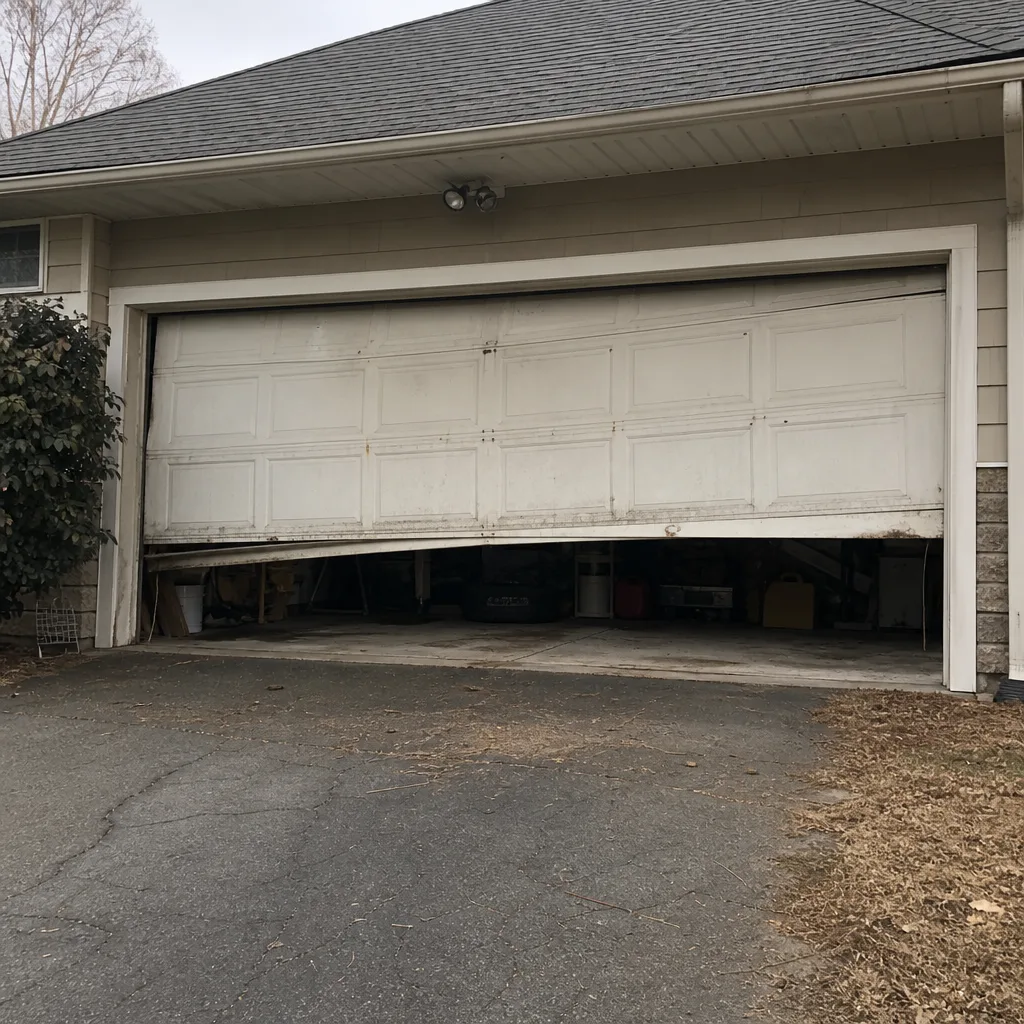 Before
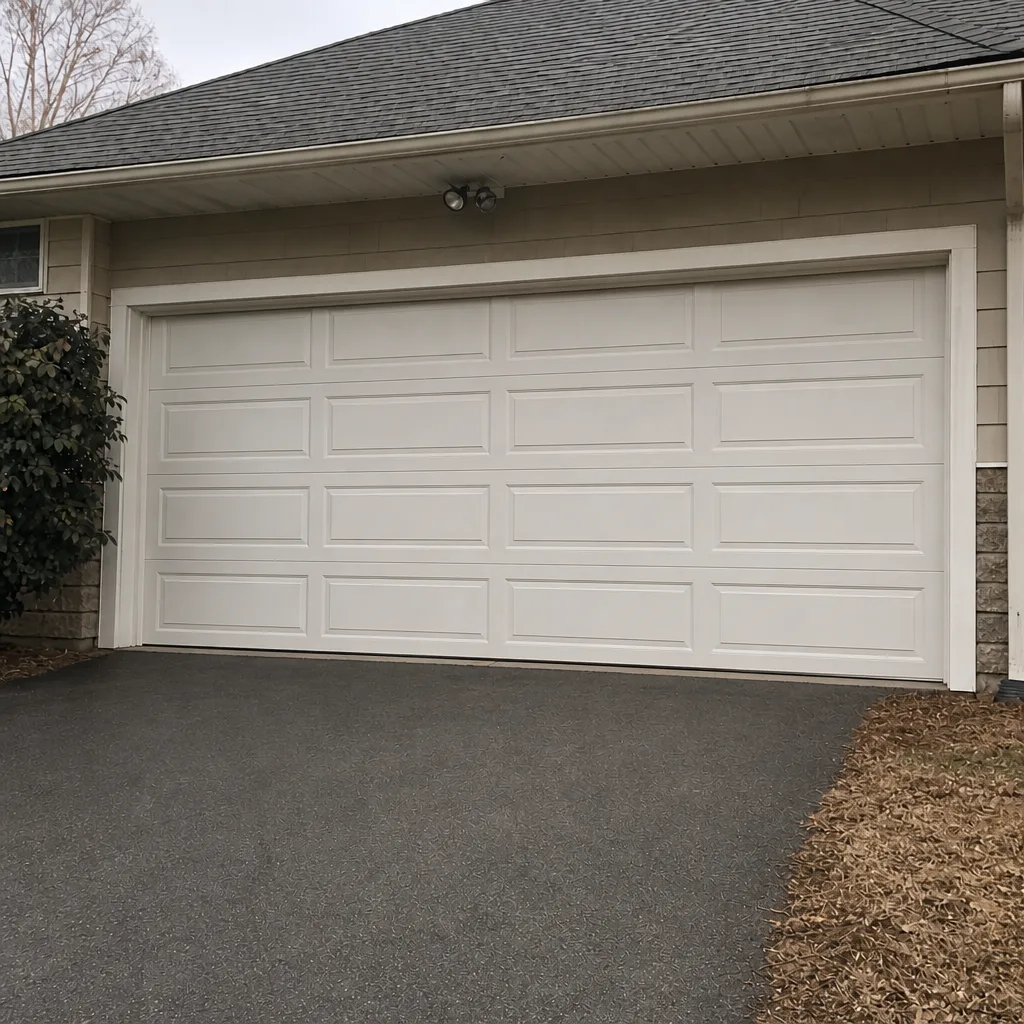 After
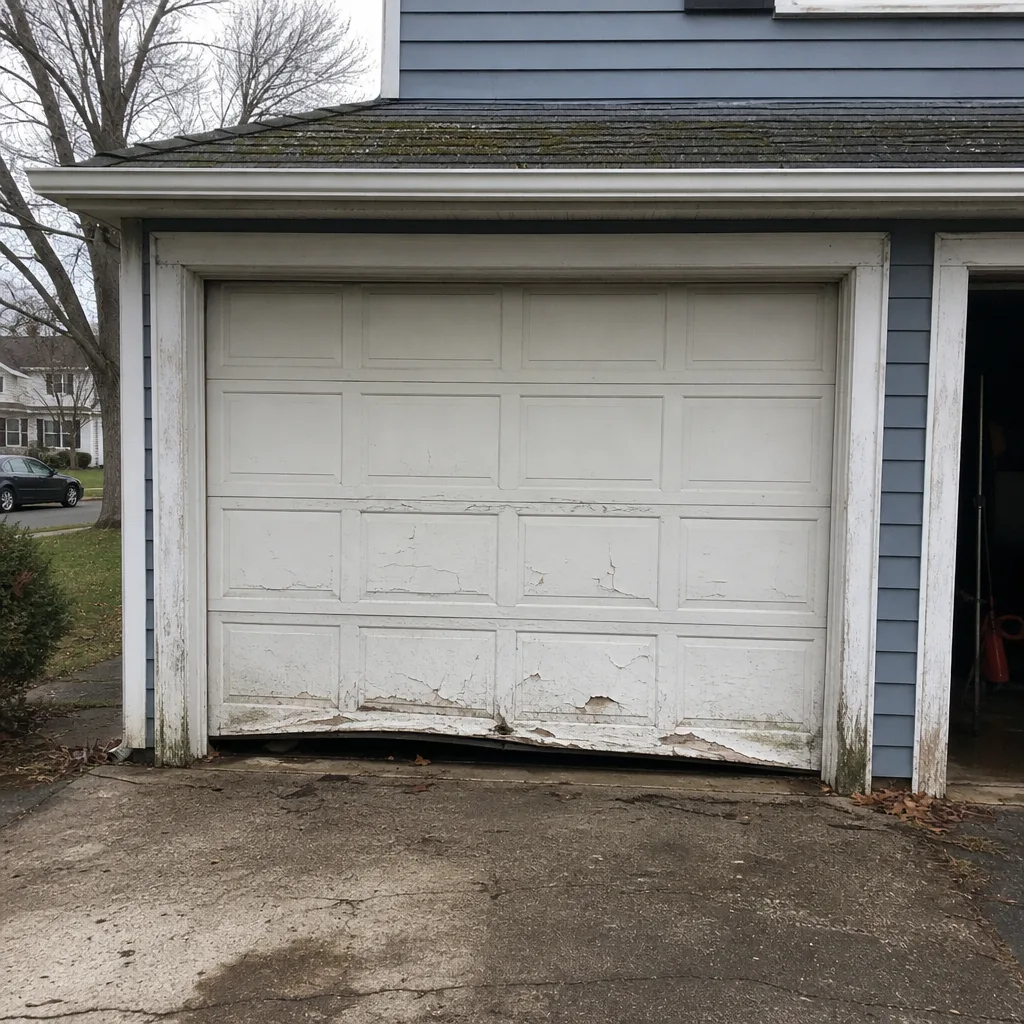 Before
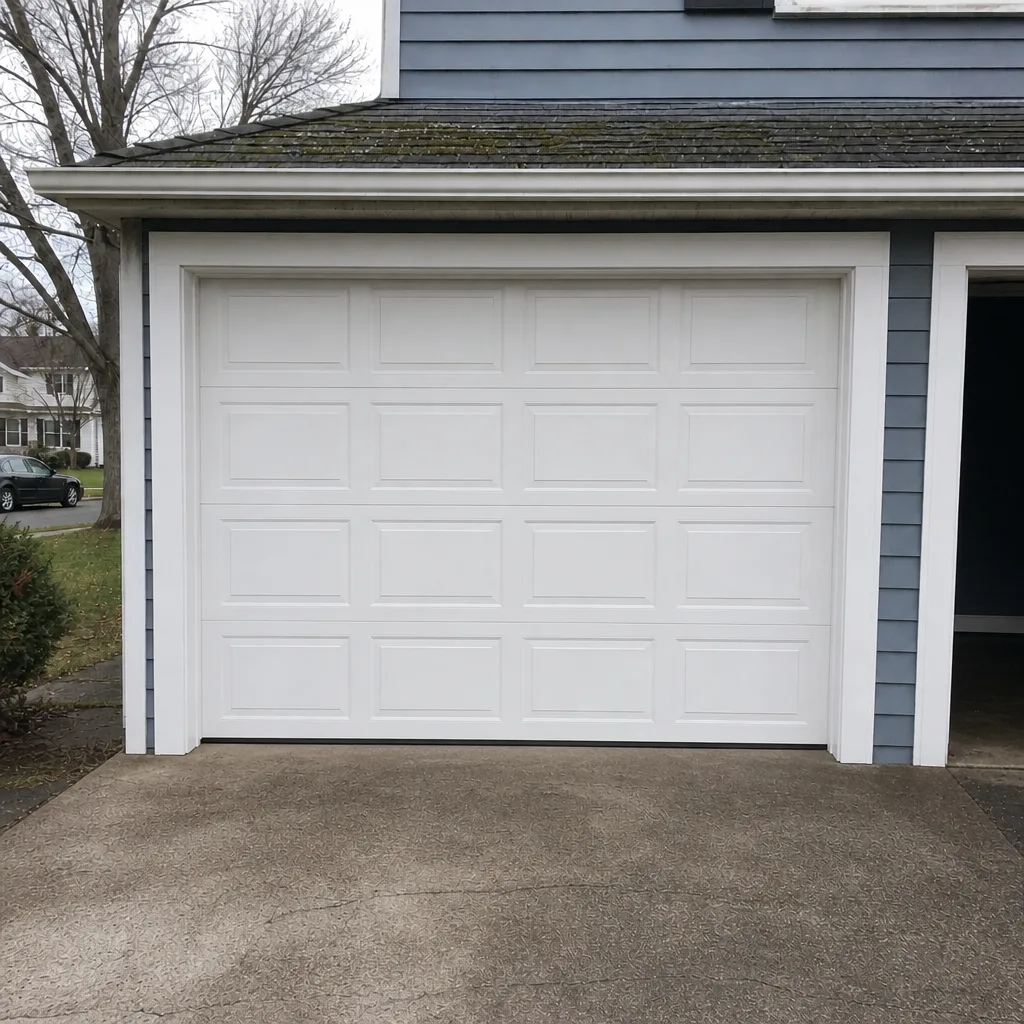 After
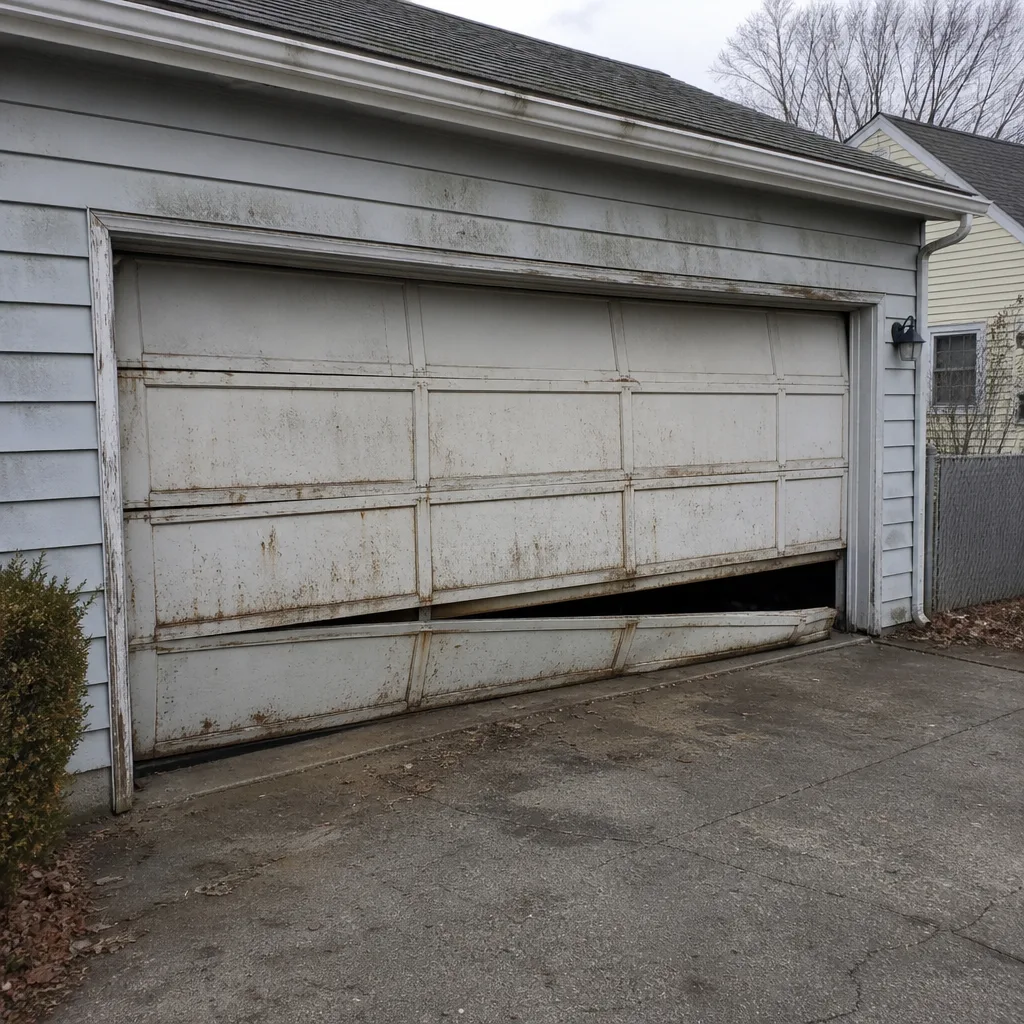 Before
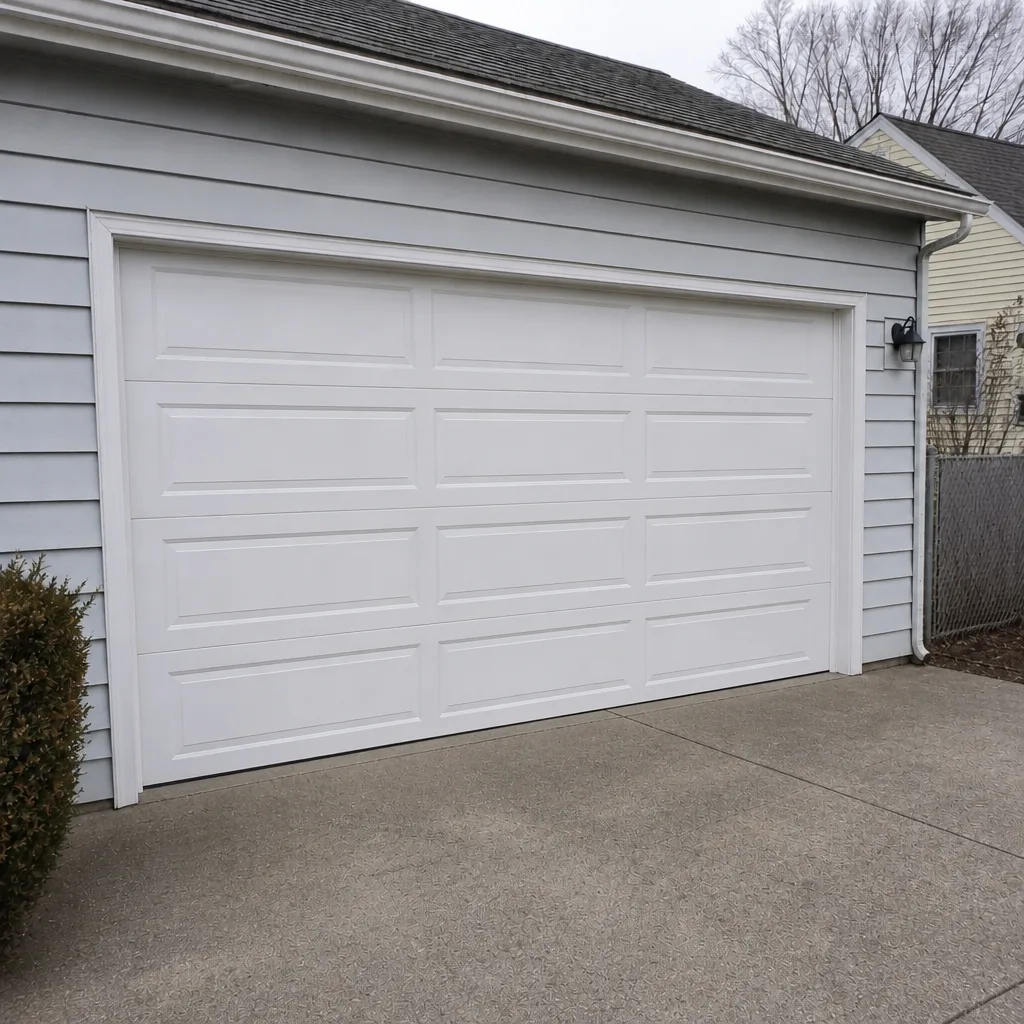 After
When to Call a Professional
Call a professional when the job involves a spring, a cable, the torsion assembly, a bent track, or any structural part of the door. Call immediately when the door is stuck open, when the door is visibly uneven, or when the opener runs but the door doesn’t move. Those are the scenarios where the wrong guess gets expensive or risky fast. For everything else in the safe bucket, handle it yourself, we’d rather you did, and call us only if it doesn’t resolve.
Lawrence Garage Door Repair Co offers free estimates in Lawrence, and we’re set up for emergency calls as a core part of what we do, not an afterthought. One call covers opener repair, spring work, panels, and full installations. Call (877) 492-1952 to book a free estimate, or visit our Lawrence Garage Door Repair Co page to see all the services we cover.
Frequently Asked Questions
No, we strongly recommend against it. Torsion springs store enough energy to cause serious injury, and the proper winding bars plus the balancing check after installation are both steps a homeowner can’t safely take on their own. Call (877) 492-1952 for an exact spring repair quote, and remember that a matched pair usually costs about twice the single-spring price, since we normally replace both together.
No, the written estimate we give you before work starts is the price. We diagnose first, quote in writing, and only begin when you’ve agreed to it. If the repair turns out to be something different from what the phone diagnosis suggested, we’ll tell you before any work continues, and re-quote if needed. Estimates are free in Lawrence, so there’s no cost to finding out.
Only for the safe bucket: lubrication, sensor alignment, and battery swaps. Kits sold online for spring work almost never include the winding bars or the balancing check a real repair requires, and older Lawrence door frames often make a generic fit harder than the kit expects. If a kit fails, the emergency call rate usually costs more than a planned repair would have.
If the opener runs and makes noise but the door doesn’t move, it’s usually the spring, a drawbar, or the opener gear. If the door moves but the opener doesn’t run, it’s almost always the opener, remote, wall button, or sensor. A quick check of whether the opener motor runs when you press the button tells you which category you’re in before you call. Call (877) 492-1952 and we can walk you through what you’re seeing, and book an exact quote if you need one.
A door stuck open is a priority call because it’s an immediate security concern. That’s exactly the kind of situation our emergency service exists for. Call (877) 492-1952 and we’ll get someone out as soon as possible.
Yes, the local professionals we connect you with are licensed and insured as their state requires. If it’s a spring job, a cable fix, a bent track, or a full installation, the technician coming out is trained to handle that exact type of work. Our technicians have up to 15 years of experience, and we work across the major brands including LiftMaster, Chamberlain, Genie and Clopay.
The Bottom Line
The DIY-versus-professional call on a garage door comes down to one question: does the task involve the springs, the cables, or the door’s structural alignment? If it doesn’t, and it’s lubrication, sensor work, or a remote reset, handle it yourself. If it does, stop and call. The injury risk with high-tension parts is real physics, not a scare tactic, and the cost of a failed attempt, especially in Lawrence’s cold months and older homes, is usually higher than the planned repair would have been. For everything else, we work on the door you have, and the right fix is the one that makes the door safe again.
Lawrence Garage Door Repair Co covers the full range, and we’re happy to give a free estimate in Lawrence whether you need one repair or a consultation on whether a repair is the right call. Call (877) 492-1952 to book.
Written by the team at Lawrence Garage Door Repair Co.