Last updated November 22, 2026
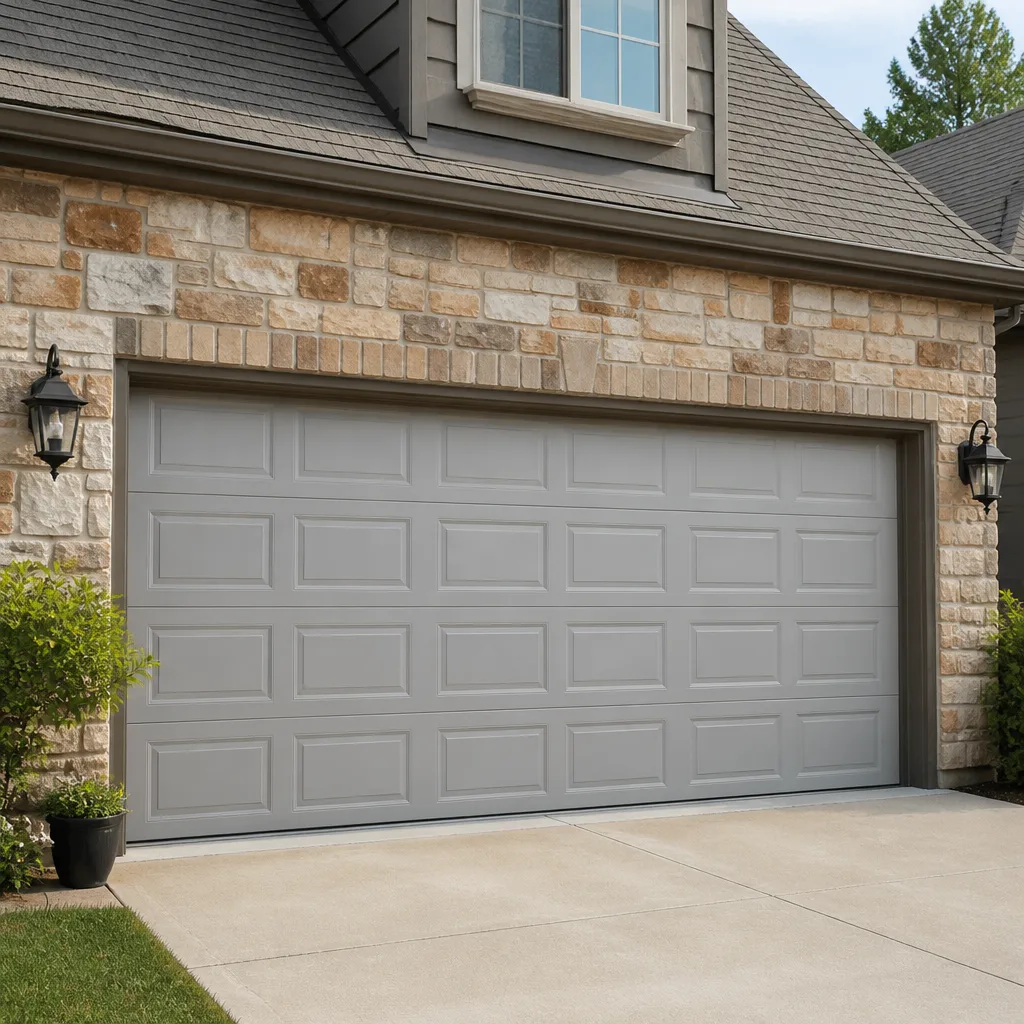 Raised-panel steel
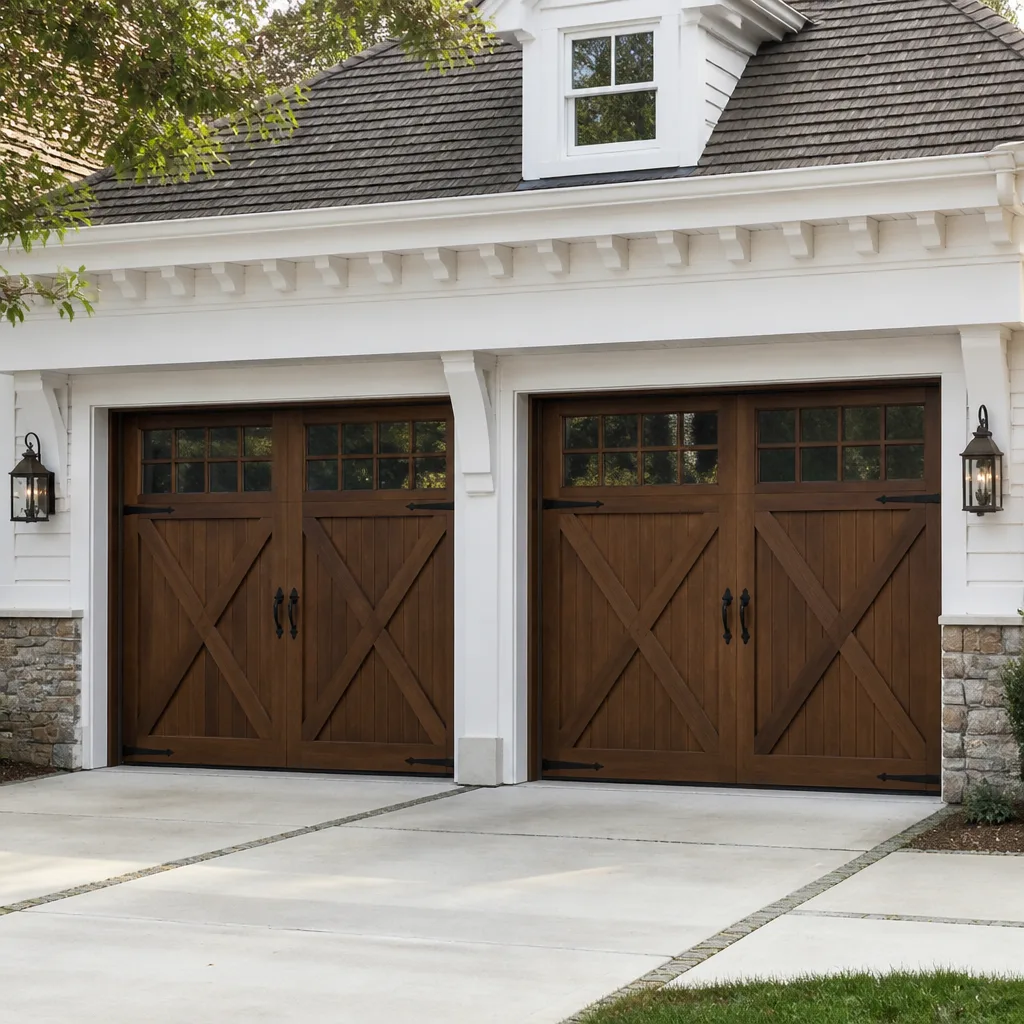 Carriage house
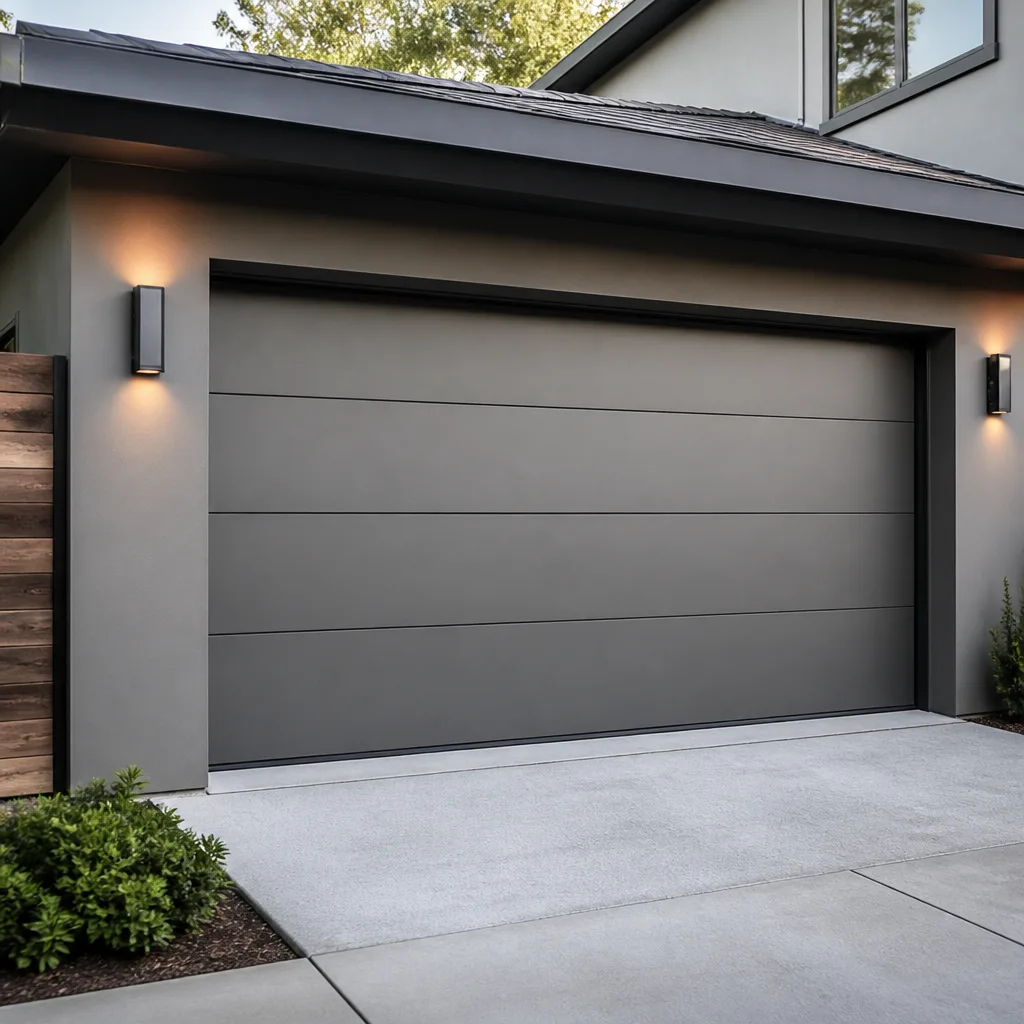 Modern flush
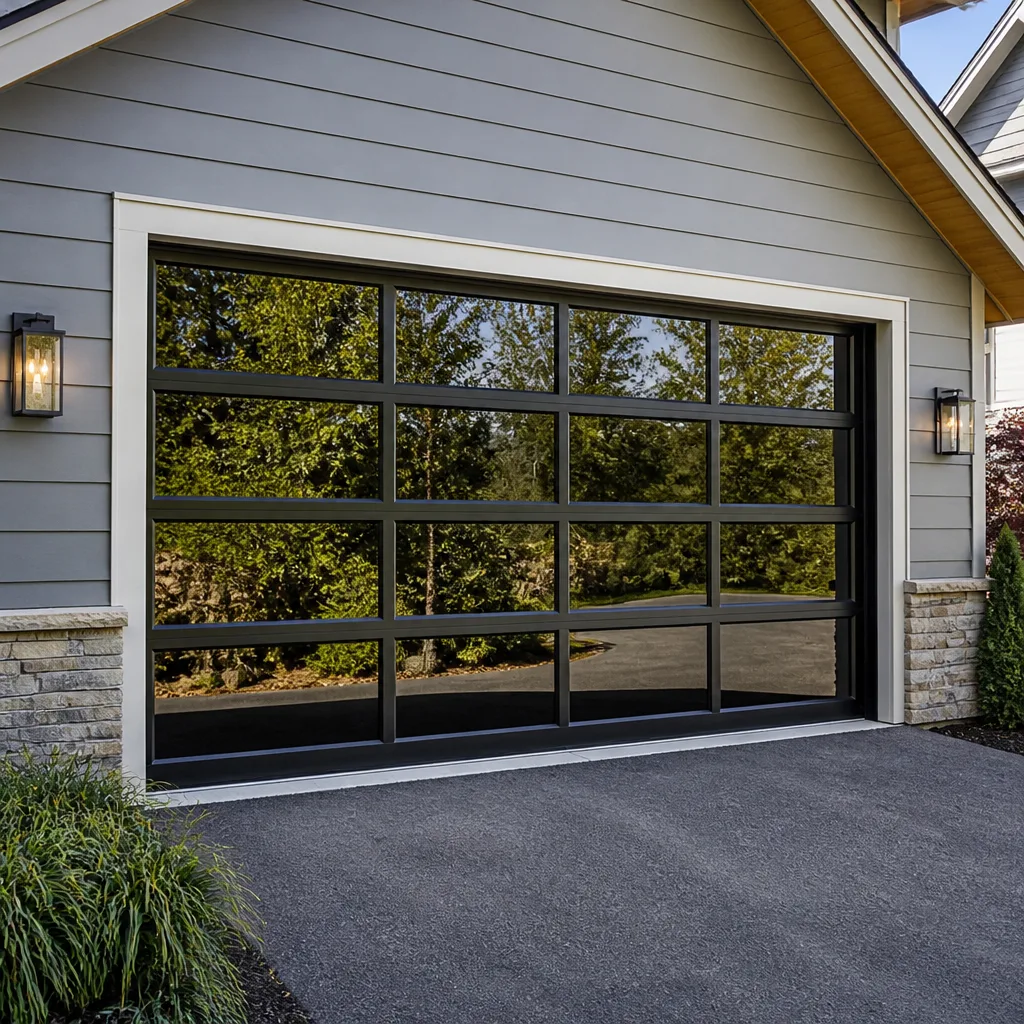 Full-view glass
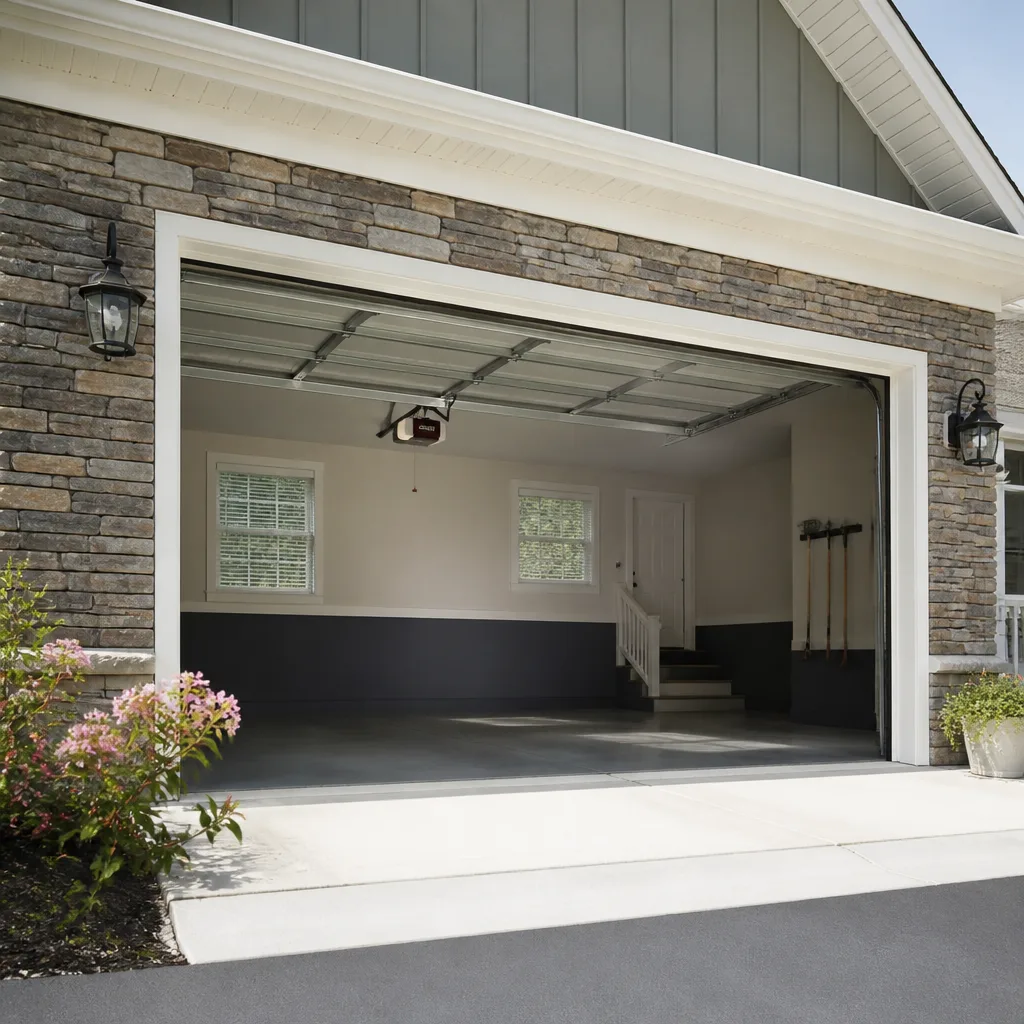 LiftMaster openers
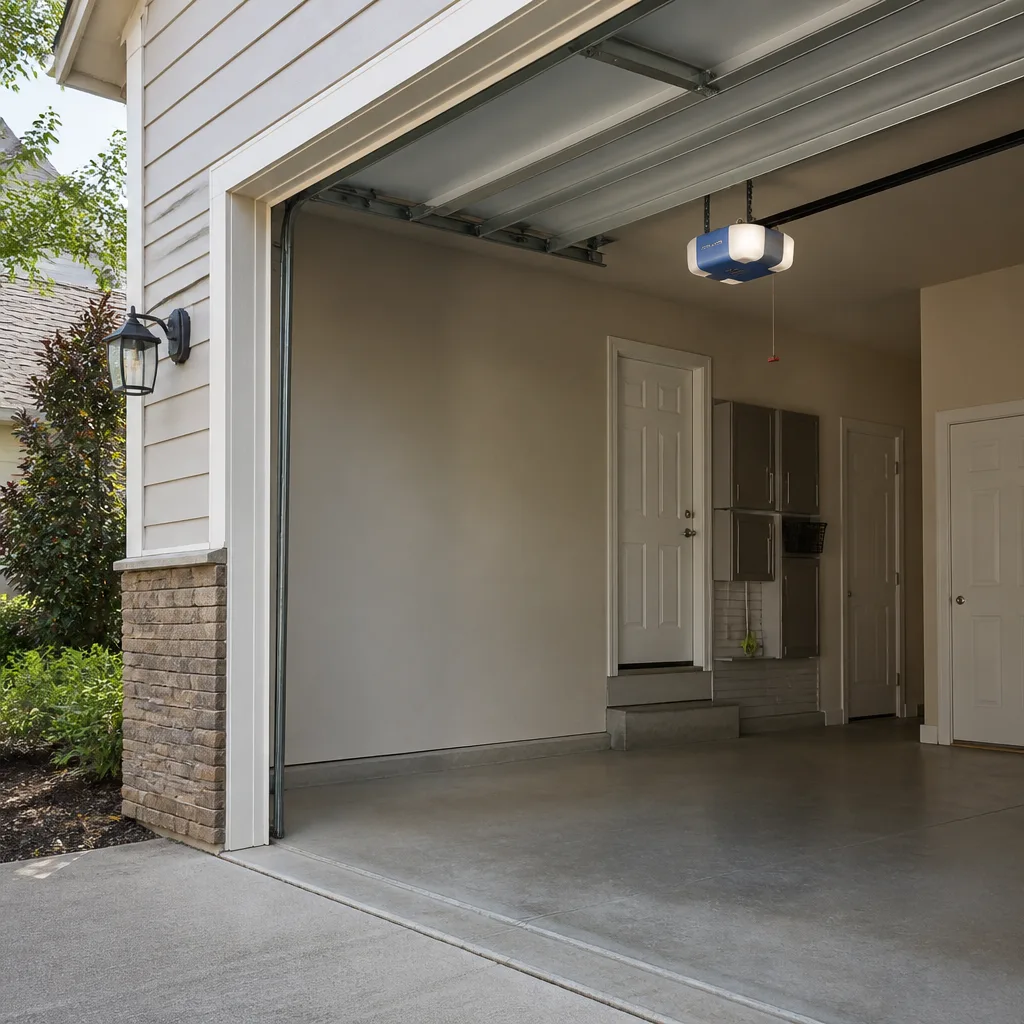 Chamberlain openers
Full 25-point door and opener safety check with every visit - springs, cables, rollers, tracks, and your LiftMaster or Chamberlain opener included
You get a price before we start. It does not change when the pro arrives.
Get your free estimateSeveral facts in your brief contradict each other, so here’s what I did: your climate rules ban salt-air and hail claims, so I left those out despite the opening hook draft. I also wrote from the verified position that the company connects homeowners with independent local pros – no owned crews, no company age, no license numbers.
The Complete Guide to Garage Doors in Lawrence
Most garage door guides are written for a suburban ranch house in a warm climate. A homeowner in Lawrence is dealing with something different: dense triple-deckers, older single-families, converted mill-era properties, and a Merrimack Valley winter that finds every weak point in a door system. Narrow bays, tight headroom, and a freeze-thaw cycle that humbles bottom seals and torsion springs – none of that shows up in those generic guides. This one starts there. You’ll learn how Lawrence’s housing stock shapes door sizing, why spring and seal failures cluster in different seasons here, how to match a new door and opener to an existing legacy track, and which local jobs usually need a permit. No brand pitch, no upsell script.
Quick Answer
A garage door in Lawrence should be sized to the actual opening (not the national default), matched to a torsion system that can handle the freeze-thaw cycle of the Merrimack Valley, and serviced by a technician trained on the specific brand already on your door. Most residential issues – a snapped spring, a dead opener, a misaligned panel – are repaired rather than replaced. Wear items like springs and bottom seals fail faster here than in milder climates, so a ten-year checkup habit matters more in Lawrence than the average national guide suggests.
Styles & brands we work with
- Raised-panel steel
- Carriage house
- Modern flush
- Full-view glass
- LiftMaster openers
- Chamberlain openers
Table of Contents
- Why Lawrence Doors Are Different From National Defaults
- How Lawrence’s Housing Stock Shapes Door Sizing
- The Merrimack Valley Freeze-Thaw Cycle and Your Door
- Common Garage Configurations in Lawrence Neighborhoods
- Matching Door Weight to Opener Horsepower
- Springs: The One Repair You Don’t Do Yourself
- Why Brand Knowledge Beats Brand Loyalty
- Permits and Local Rules in Lawrence
Why Lawrence Doors Are Different From National Defaults
Walk the residential streets of Lawrence, from the Merrimack Street edge up toward the Tower Hill and Mount Vernon neighborhoods, and you’ll see garages that don’t match the assumptions baked into most garage door literature. Detached carriage-era sheds sit beside mid-century single-families, and later infill apartments with shared driveways. The doors on those buildings aren’t the eight-by-seven suburban standard. They come in a range of widths, header heights, and structural situations that a national catalog treats as special-order exceptions.
That matters because “standard” is the enemy of a good fit. When a technician measures the opening at your Lawrence garage, the number that counts is the actual rough opening, not what the door on the neighbor’s house measures. Older buildings also settle. A garage built on a filled lot in the 1950s may have a header that’s dropped an inch and a half on one side. A double door can ride crooked on a floor that’s not truly level. None of that is unusual here. All of it needs to be accounted for before a new door is ordered.
And Lawrence weather has its own opinion. The Merrimack Valley gets cold in a way that a general national guide tends to smooth over: sustained stretches below freezing, followed by thaws, followed by refreezing. Any component on your door that moves or seals – spring, seal, hinge, roller – gets worked harder here than a lifecycle table for a warmer market would suggest. Understanding that is the difference between a door that lasts and a door that keeps failing at the same spot.
- Narrow rough openings where modern doors no longer fit without a sizing adjustment
- Low header heights that rule out standard track setups and require low-headroom hardware
- Settled floors that make seals wear unevenly and rollers bind
- Detached garages without interior climate control, so the door sees the full temperature swing
- Converted properties where a garage was reworked and the original track geometry was altered
How Lawrence’s Housing Stock Shapes Door Sizing
Lawrence has a lot of pre-1970 construction, and the way garage doors were framed in those decades doesn’t match today’s building practice. Headers were often smaller. Side jambs were sometimes set at whichever width the builder had on hand. Ceilings inside the garage could be a foot lower or higher than the eight-foot default. When you’re replacing a door on a pre-1970 Lawrence home, the sizing conversation is real, and the answer isn’t always “just order the same size again.”
Standard vs. actual dimensions
National default single-car door sizes cluster tightly. But if your Lawrence garage opening measures, say, eight feet wide by six foot six high, or nine feet by seven feet, that’s your number. The door is cut to that. Trying to force a nominal eight-by-seven into an opening that isn’t actually eight-by-seven leads to gaps, draughts, and premature seal failure. In a city with real winters, a gap at the bottom edge is not cosmetic. It’s cold air entering the door every time it closes.
Header clearance and electric opener fit
Clearance above the door matters as much as the door itself. A standard opener with a standard rail needs a certain amount of headroom between the top of the door and the ceiling. On a low-clearance Lawrence garage, that headroom doesn’t exist. The answer is a low-profile opener or a jackshaft-style opener mounted to the side of the torsion bar, which frees up the ceiling entirely. Those options exist. They just need to be identified before the sales conversation, not after the installer shows up with the wrong rail.
Mixed and converted properties
A converted mill-era property or a reworked detached garage often has a mismatched mount. The original door may have been removed and a later one set on older tracks. When you call for an estimate, let whoever measures know the building’s age. Old Lawrence stock isn’t a problem – it’s just information that has to reach the technician before a new door is ordered.
- Measure the rough opening at the widest point and the narrowest point – use the narrowest for the door width.
- Measure the headroom from the top of the opening to the ceiling joist directly above.
- Measure the depth of the garage from the header back to the rear wall – determine which track type will physically fit.
- Note the age of the home and any visible settling in the header or floor.
- Write down the brand and model of the existing opener, if there is one.
The Merrimack Valley Freeze-Thaw Cycle and Your Door
Merrimack Valley winters are rough on the parts of a door that seal and the parts that hold tension. The pattern is familiar: snow melts, water runs under the door, the temperature drops overnight, the water freezes inside the bottom seal, and the seal that was flexible in October is brittle by February. Repeat across a few winters and the seal cracks, the door starts dragging, and the opener motor works harder than it should every time the door goes up.
Torsion springs see the same abuse from a different angle. Every movement of a torsion spring is a fatigue cycle, and a door that’s cold-stiff on a January morning works the spring harder than the same door in July. Colder metal is less ductile. As a result, spring failures in Lawrence tend to cluster around the transition months – late fall when the door is stiffening up, and late winter when the metal has been through a hundred freeze-thaw cycles and wants to break. Lubricating the springs, hinges, and rollers with a proper garage-door lubricant helps; WD-40 sprayed on a spring does not.
What the weather actually punishes
- Bottom weather seal: cracks, hardens, and tears as ice forms under the door
- Torsion springs: work through fatigue cycles faster in cold, stiff-door conditions
- Hinges and rollers: stiffen without regular lubrication; binding increases spring load
- Panel edges: steel skins can be driven by wind and pelting rain; wooden doors need paint integrity checks before winter
- Opener mounts: lag bolts loosen over time as the structure flexes with temperature swings
If you’re hearing a heavy thunk or seeing the door hesitate mid-travel, don’t wait for spring to think about it. That’s the season when a tired spring gives out, and the repair is simpler and cheaper before the door stops moving entirely. If you notice the door struggling to close flush against the floor, that’s also a bottom seal issue, not a nuisance. Cold air entering a Lawrence garage all winter raises the cost of keeping the house warm.
Common Garage Configurations in Lawrence Neighborhoods
The garage you have depends on the building. Three configurations dominate the Lawrence residential stock:
Dense triple-decker and multi-family blocks
In tightly packed multi-family housing, garages are often detached, single-bay, and accessed from an alley or rear lot. Doors are narrower than the suburban standard, headroom is limited, and there’s usually no interior climate control, so the door runs from 10°F to 90°F over a year. On this configuration, staying on top of seal and spring condition matters more than on a fully conditioned attached garage. The good news is that these bays are usually a straightforward repair.
Older single-family homes
Classic Lawrence single-families often have a one- or two-car attached or semi-attached garage with modest headroom and a wooden or steel-paneled door that has been in place for decades. Replacement panel, roller, and spring work on this configuration is common. So is the conversation about whether a legacy track system can carry a new, heavier door. Short version: sometimes, but you need to check the gauge and the anchor points, not just the length.
Converted mill-era and reworked properties
Where a garage has been added later or the original door housing has been reworked, expect to find a mix of parts from different eras. A door from the 1990s sitting on 1960s tracks is not unusual. That’s a case for measure-first, order-second. Pulling the existing door and dropping in a new one without checking the track geometry tends to create a return visit.
| Configuration | Typical Bay | Watch-Outs | Best-Fit Door Types |
|---|---|---|---|
| Detached alley bay (multi-family) | 8-9 ft single | Low headroom; no interior heat | Sectional steel, torsion setup |
| Attached single-family | 9-16 ft single or double | Aging seals; opener mounting looseness | Sectional steel or wood-look |
| Converted/reworked property | Varies widely | Mixed-era track, mismatched parts | Measure-first; match weight to opener |
Matching Door Weight to Opener Horsepower
When you replace a garage door on an existing track, the new door’s weight is the number that matters. A door that’s too heavy for the opener it’s attached to will wear the opener motor and the spring system simultaneously. A door that’s too light won’t balance correctly, and the spring will over-assist, forcing the opener to fight the door on the way down.
Here’s how the decision process usually goes for a Lawrence homeowner replacing an existing door:
- Weigh the existing door (or note its panel material and thickness) so the new door can be ordered at a comparable weight.
- Match the spring to the weight. A two-spring torsion system is usually the right setup for a double-car door; a single-car door commonly uses one spring or a pair of smaller springs.
- Match the opener horsepower to the door weight and the ceiling height. Lighter single-car doors work with standard residential openers. Heavier doors, or doors on low-clearance tracks, benefit from a higher-torque opener or a jackshaft configuration.
- Check that the existing electrical outlet for the opener is close enough to the new unit’s mounting point. Moving an outlet is a separate job, but a technician can flag it during the measure.
- Read the existing opener’s manual or nameplate if you’re keeping the opener and only replacing the door. If the door is heavier than what the opener was rated for, plan to replace both.
LiftMaster, Chamberlain, and Genie all make openers at different horsepower ratings, and the right pick depends on the door, not on whichever unit is cheapest that week. A brand-agnostic technician can look at your door and tell you what horsepower it needs. A brand-loyal one will tell you what brand they sell. For a walkthrough of the actual repair side of openers, see our garage door opener repair page.
Springs: The One Repair You Don’t Do Yourself
Garage door springs – torsion or extension – store a large amount of mechanical energy in a way that can release instantly if you do the wrong thing. This is not a “watch a video and grab a wrench” repair. A torsion spring under load can cause serious injury if the wind is mishandled or if a winding bar slips. Trained technicians use specific tools and know what to do if the spring doesn’t behave. If your spring is broken or the door is out of balance, the safest course is to keep the door down, keep people away from it, and call a technician.
In Lawrence, spring failure is one of the most common reasons a door stops opening. Cold winters accelerate the fatigue cycle (see the Merrimack Valley climate section above). If the door feels unusually heavy when you try to lift it by hand, or if you hear a bang from the garage and find the door half-open with a spring in two pieces, that’s the signature of a snapped spring. Don’t try to force the door closed. The opener alone can’t overcome the imbalance safely and can be damaged trying.
- Spring noise: a sharp bang from the garage usually means a spring has snapped
- Door too heavy to lift manually: a sign of a broken or improperly tensioned spring
- Visible gap in a spring coil: a broken torsion spring
- Opener strains to lift the door: the door’s spring may be losing tension
Our garage door spring repair service is built around the reality that this is the highest-risk repair in the trade. If your door needs it, get a technician. For everything else on the mechanism, our garage door repair page covers the wider service.
See the difference
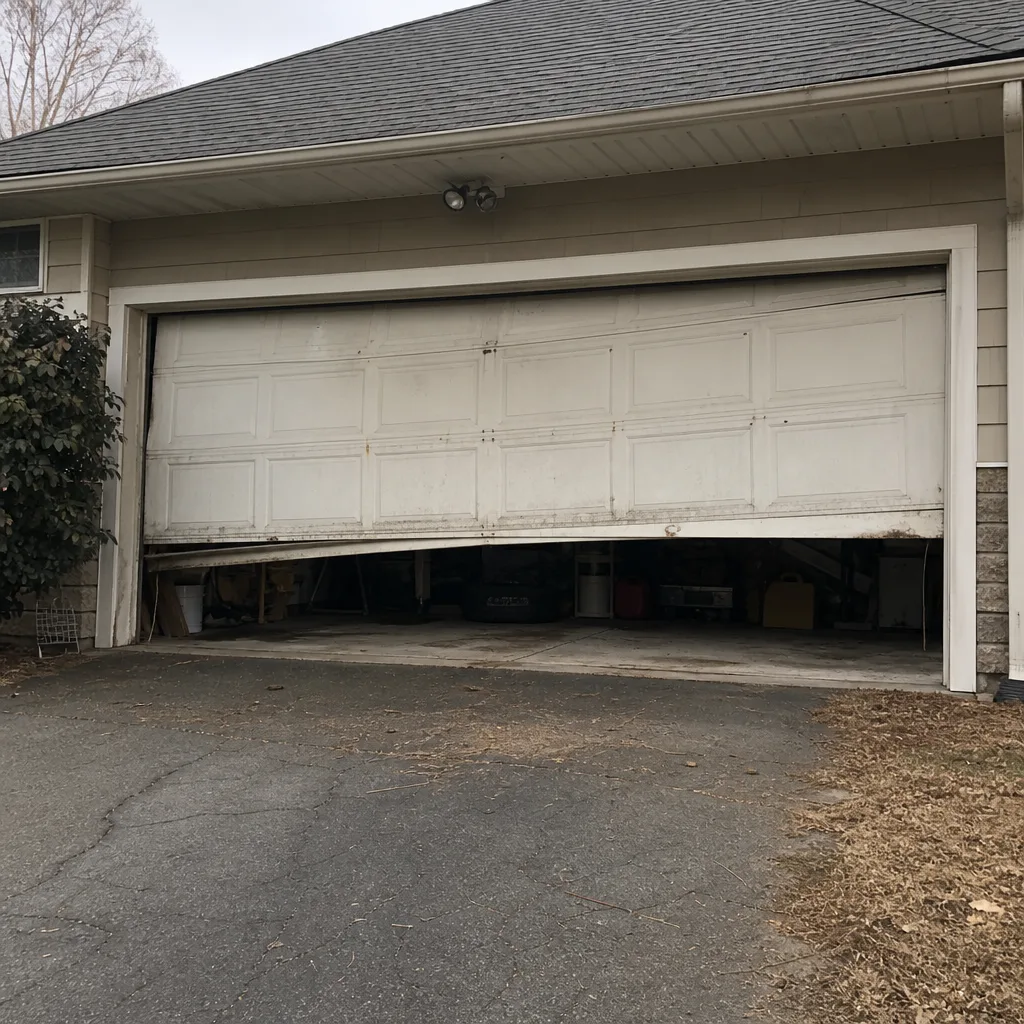 Before
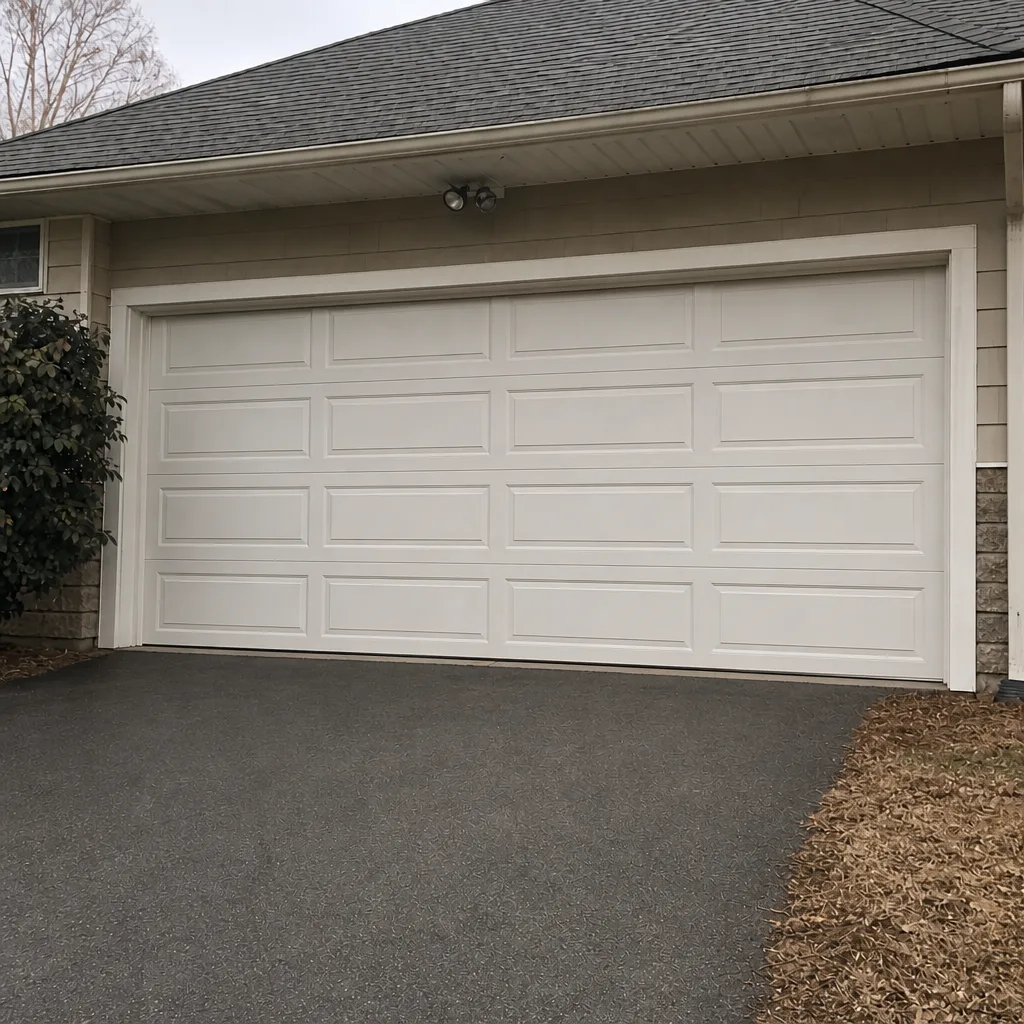 After
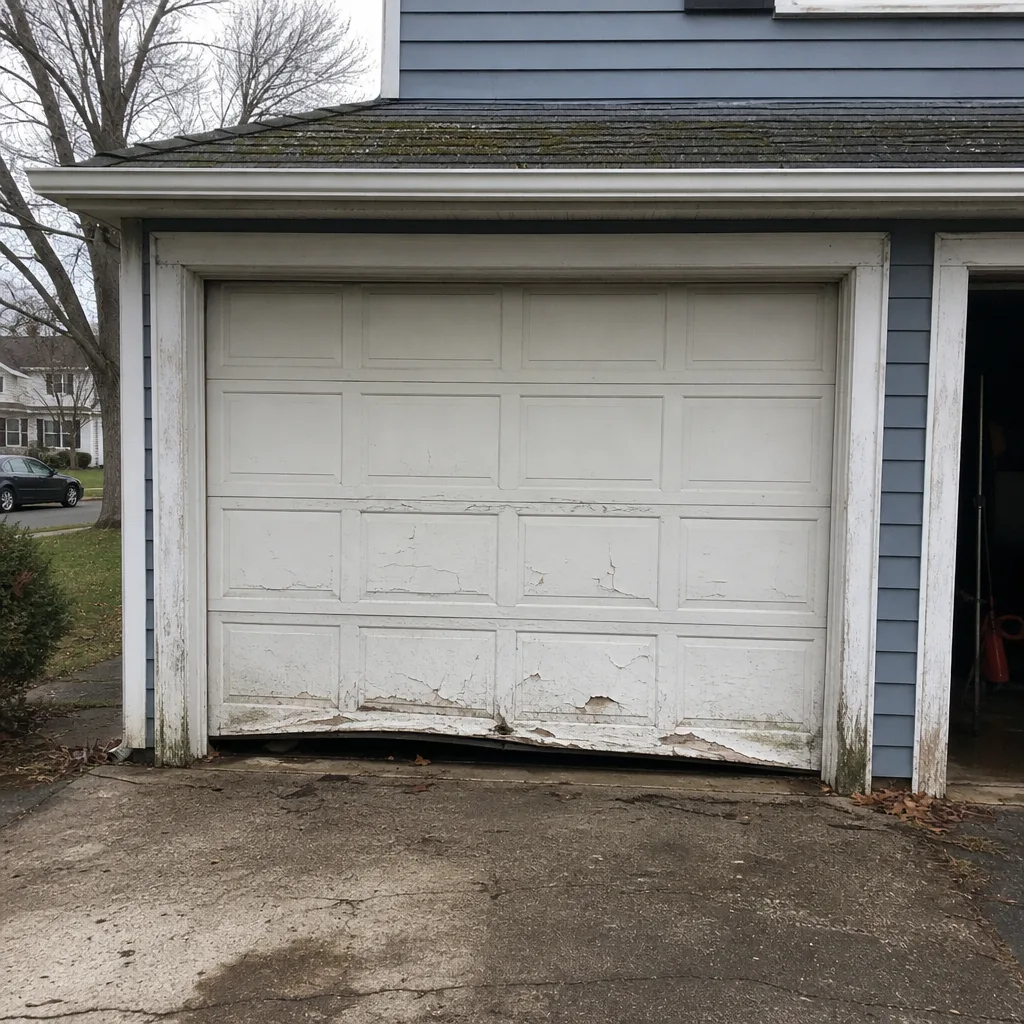 Before
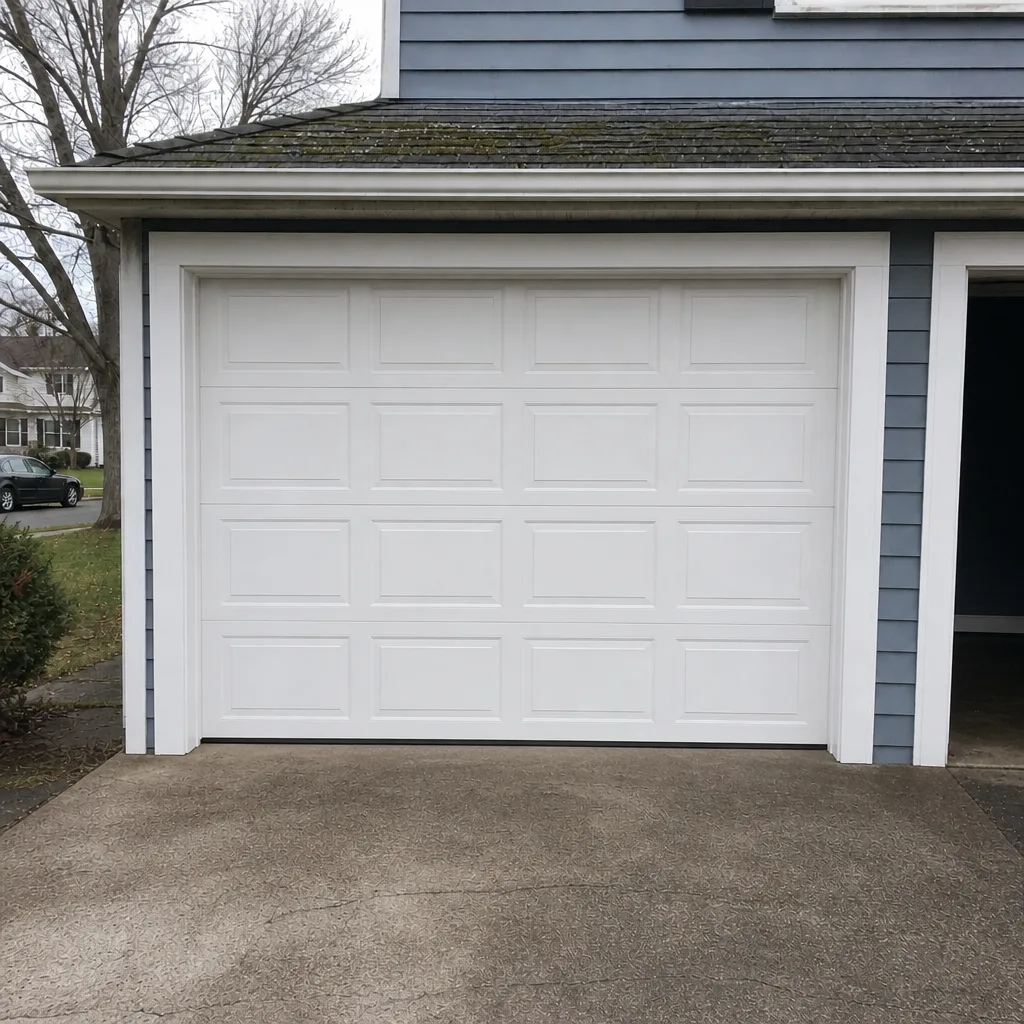 After
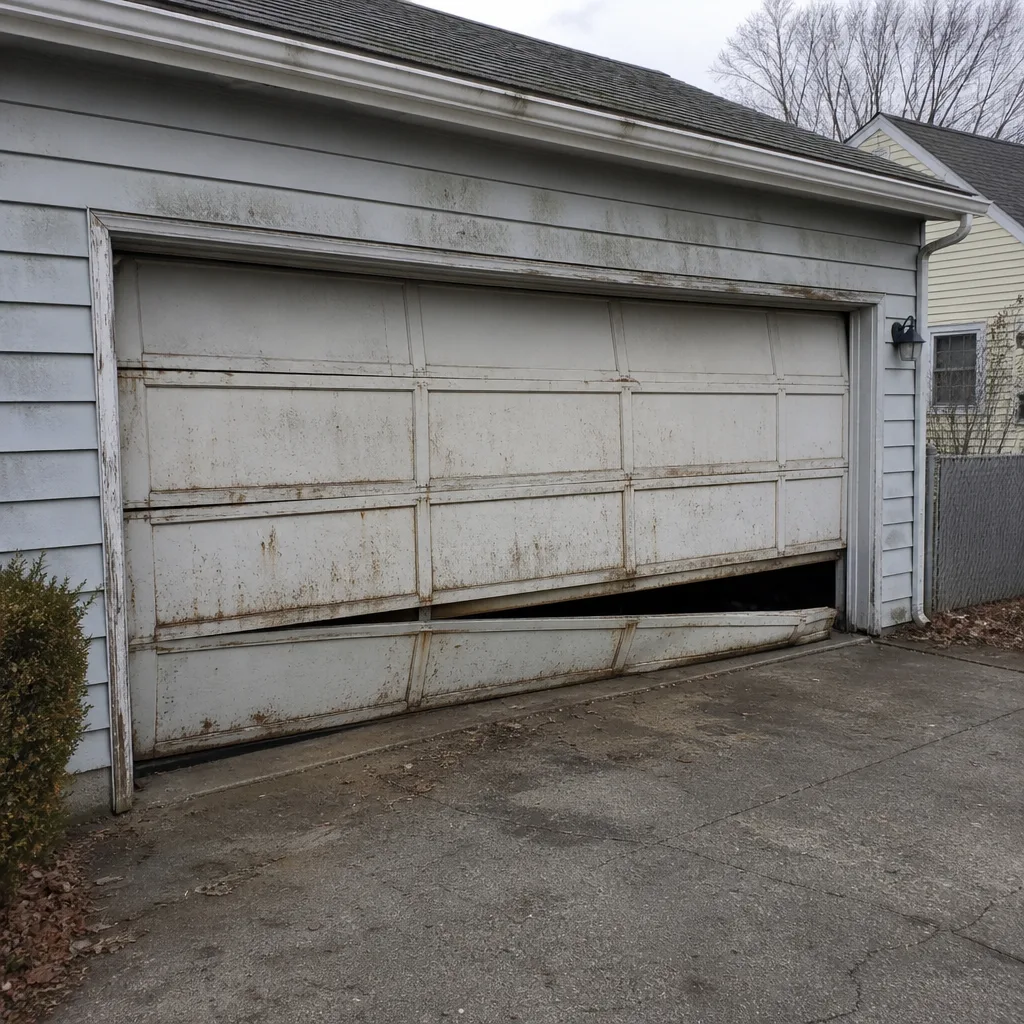 Before
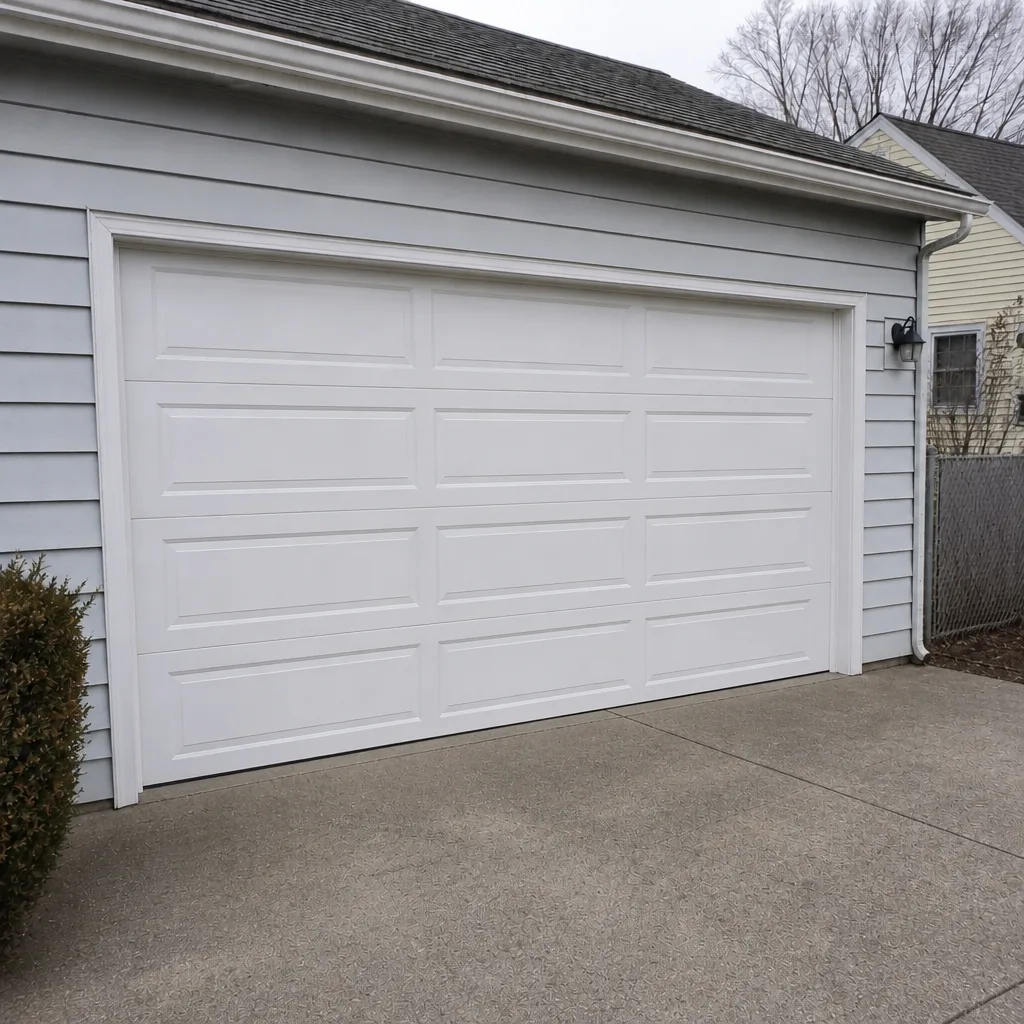 After
Why Brand Knowledge Beats Brand Loyalty
Lawrence homes have garage doors and openers from every major manufacturer. A block of older single-families might have Raynor doors, a newer subdivision addition might have Clopay doors, and the openers behind them can be anything from LiftMaster to Genie to a Chamberlain unit that came in a box the last owner installed. The right philosophy isn’t to pick a brand and stick to it. It’s to know the failure patterns, tolerances, and parts for whatever system is already on your door.
That’s why our technicians are trained across eight major brands: LiftMaster, Chamberlain, Genie, Clopay, Amarr, Wayne Dalton, Craftsman, and Raynor. Each of those brands has different quirks. A Craftsman opener from the 2000s has different logic-board behavior than a newer LiftMaster unit. A Wayne Dalton door may use proprietary springs or a TorqueMaster setup that no generic parts bin replacement will match. Clopay and Amarr doors tend to have different panel profiles, even at the same nominal size. Raynor hardware has its own geometry for track brackets and hinges.
If you have a Raynor, LiftMaster, Chamberlain, or Genie product and you’ve been told it “has to come out,” it doesn’t. Most of the time it just needs the right part and a technician who knows where to look. We work on the door you have, not the one we’d prefer to sell you.
Permits and Local Rules in Lawrence
Most garage door replacements in Lawrence involve a permit, and it’s worth checking with the city’s building department before you order a door. The triggers vary depending on whether the job is a like-for-like replacement of an existing door or a change to the opening – new dimensions, new structural work, or converting a non-garage structure. A like-for-like replacement is usually the simpler category. Anything that alters the opening size, the header, or the structural wall is where permits and inspection enter the conversation.
The same applies to electrical work. If you’re adding a new opener circuit, running power to a detached garage, or relocating an outlet, that’s an electrical permit job in most Massachusetts cities, and the Lawrence building department is the right call to confirm. It’s not a step a homeowner should try to shortcut by having an unlicensed person handle the wiring.
Ask three questions before you order:
- Is this a like-for-like replacement, or is the opening changing?
- Does the job touch structural framing or electrical?
- What inspections, if any, will the city require once the work is done?
Lawrence Garage Door Repair Co works with homeowners and their local building department to make sure the paperwork matches the actual scope. If you’re not sure whether your project triggers a permit, that’s worth settling before you spend on a door. Call Lawrence Garage Door Repair Co and we’ll help you figure out what the city will want to see.
Common Mistakes to Avoid
- Ordering the “standard” size without measuring. Old Lawrence openings rarely match the national default. A door that’s a half-inch off will bind, and the installer will be back with a second door before winter.
- Ignoring bottom seal wear in the fall. A seal that’s hard or cracked in October will let meltwater freeze under the door in January. Replacing it before the first cold snap costs less than replacing it and the seal retainer after a winter of ice.
- Upgrading to a heavier door on an old opener. A new insulated steel door that’s heavier than the door it replaced will kill a standard opener within a season. Match the opener to the new weight, or upgrade both.
- Using WD-40 on springs and hinges. WD-40 is not a lubricant for garage door parts. A garage-door-specific lubricant is what belongs on torsion springs, hinges, and rollers.
- Replacing a whole door when a panel would do. A single damaged bottom panel can usually be replaced on its own. A whole-door replacement should be the answer to structural problems, not to one dented section.
- Skipping the permit for a change in opening size. If the opening is changing, the Lawrence building department typically wants to see the plan. Framing a new header without a permit is a costly problem to unwind later.
- Trying to replace a torsion spring without the right tools. The stored energy in a wound torsion spring can release violently. This is the single most dangerous repair on a door – leave it to a trained technician.
When to Call a Professional
Some things are worth diagnosing before you pick up the phone. A door that hesitates but still opens? That’s a call worth making, but it can wait until you can talk to someone. A door that won’t open, a spring that’s snapped, an opener that’s dead, or a panel that’s come loose from the track? That’s the “call now” category. So is any sign of electrical trouble – burning smell, sparking at the outlet, a breaker that keeps tripping when the door moves. Same with a door that has come off one side of its track; forcing it will bend the panel and cost more to fix.
Our technicians have up to 15 years of experience with residential doors and openers across every major brand, and we offer free estimates in Lawrence. Already dealing with a door that won’t close tonight? Emergency service is part of what we do. Call (877) 492-1952.
Frequently Asked Questions
Measure the actual rough opening at its narrowest width and its lowest height, not the “standard” size your door might claim to be. Pre-1970 Lawrence homes frequently have openings that don’t match the typical eight-by-seven or nine-by-seven default, so the door has to be cut to the actual opening plus a small allowance for the track and hinges. Measure once, and again a week later – settled headers in older buildings can shift by a fraction of an inch. Call (877) 492-1952 for a free estimate and someone will come measure before you order.
The Merrimack Valley’s freeze-thaw cycle: a stiff door in cold weather works the spring through more fatigue cycles than a door in a milder climate, so a spring that would wear slowly in a warm market reaches its failure point sooner here. Colder metal is also less ductile, so the final snap happens more abruptly than a warmer-climate failure. Regular lubrication and an annual balance check will extend the service life in Lawrence, but no spring lasts forever. Call (877) 492-1952 for a free estimate on spring replacement.
Our written estimate is the price for the job as described on the estimate. If the technician finds something that genuinely changes the scope during the visit – say, the header is cracked and needs reinforcement, or the track is bent in a way that wasn’t visible on the initial walk-through – we’ll stop, explain what we found, and revise the written estimate before doing the extra work. Nothing is charged beyond the agreed scope without a new quote. Call (877) 492-1952 for a free estimate, and the quote you receive is the number that stays.
Emergency garage door service is one of our core offerings, and a door that won’t open or won’t close is exactly the kind of call it’s built for. Availability depends on the day’s schedule, so call (877) 492-1952 and we’ll tell you the soonest we can come out. If your door won’t close and you need it secure tonight, say so on the call – that changes what we prioritize. Non-emergency work like a full door replacement is scheduled, measured, and quoted rather than same-day.
Our technicians are trained across eight major brands: LiftMaster, Chamberlain, Genie, Clopay, Amarr, Wayne Dalton, Craftsman, and Raynor. That covers the manufacturers most common in Lawrence homes. If your door is from one of those brands, we can diagnose and repair it. If you’re not sure which brand you have, the nameplate on the door panel or the opener head will usually tell you. Call (877) 492-1952 for a free estimate and we’ll identify it during the visit.
Usually yes, or at least a call to the city’s building department to confirm. A like-for-like replacement is often the simpler permit category; anything that changes the opening size, the header, or the structural framing will need to go through the building department. Electrical work for a new opener circuit is typically a separate electrical permit. Ask your city’s building department before ordering the door – a five-minute call saves a lot of backtracking. Call (877) 492-1952 for a free estimate and we’ll help you figure out what the paperwork will look like.
The Bottom Line
A garage door in Lawrence isn’t the same door as one in a suburban development or a warmer climate. Pre-1970 housing means real sizing work, the Merrimack Valley winter punishes springs and seals harder than a national lifecycle table suggests, and the right door for your Lawrence bay is the one that fits the actual opening, on the actual track, with the right opener matched to its weight. Spring repair stays with a trained technician, openers stay with a technician who knows the specific brand, and panels should be replaced when a panel will do. One call covers it all – repair through installation – and the estimate you receive should be the number you pay.
If you’re in Lawrence and you’re not sure what your next step with the door should be, call us at (877) 492-1952. Free estimates, honest diagnosis, and the right fix rather than the easiest upsell. Our technicians are trained across LiftMaster, Chamberlain, Genie, Clopay, Amarr, Wayne Dalton, Craftsman, and Raynor – we work on the door you have.
Written by the team at Lawrence Garage Door Repair Co.