Last updated November 22, 2026
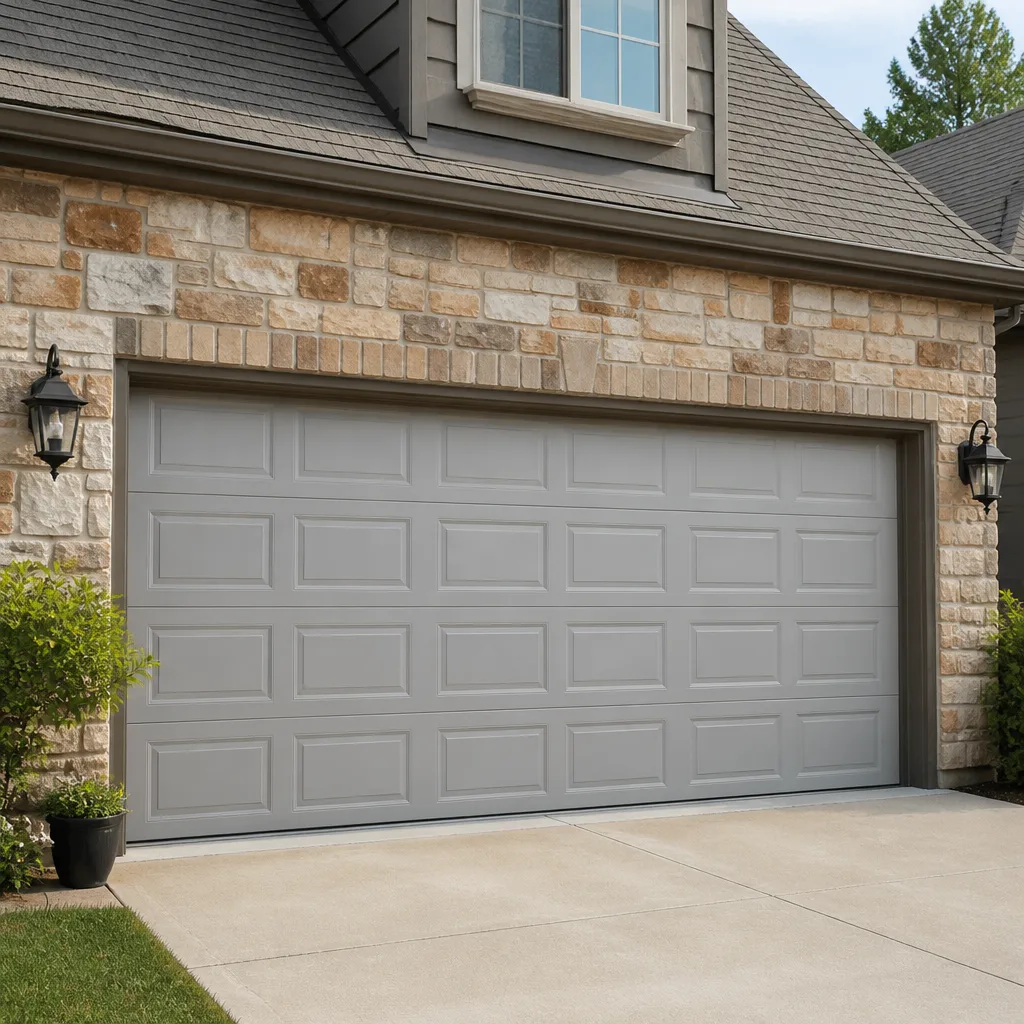 Raised-panel steel
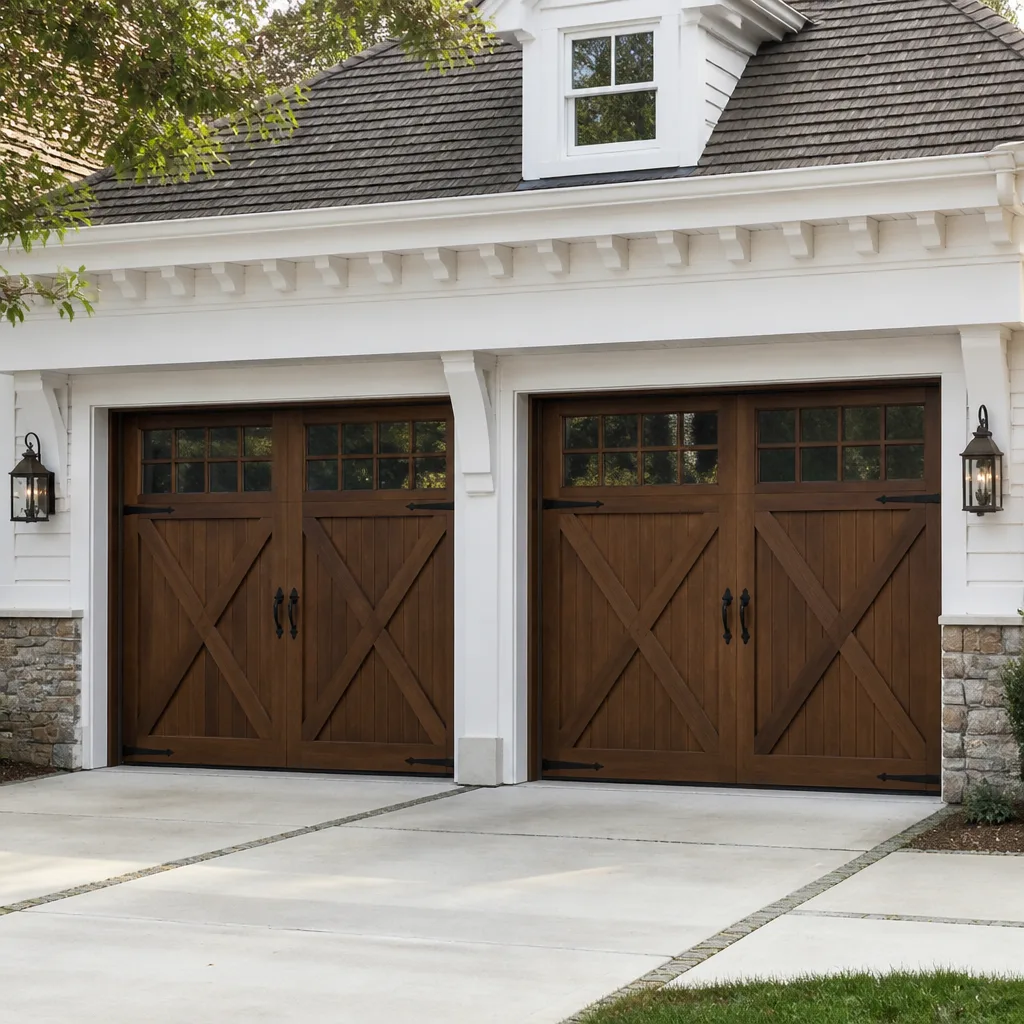 Carriage house
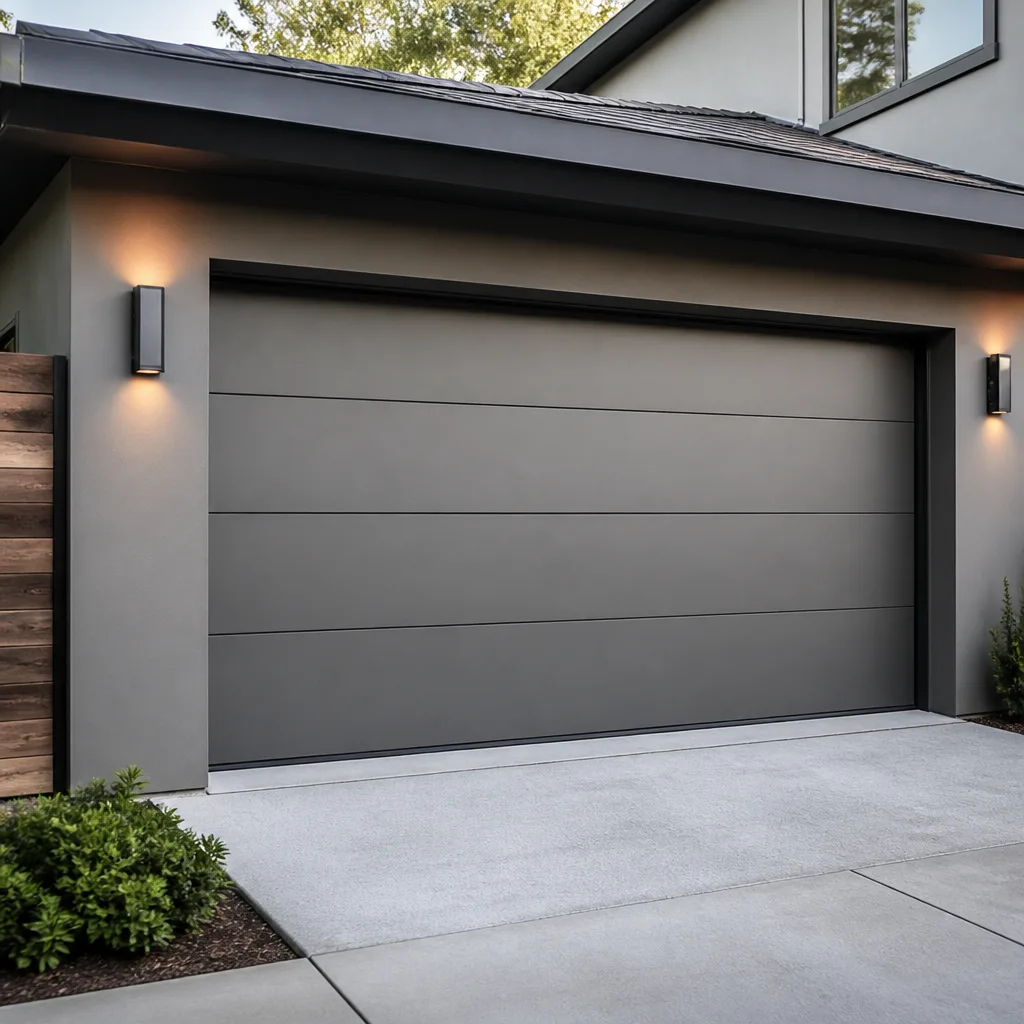 Modern flush
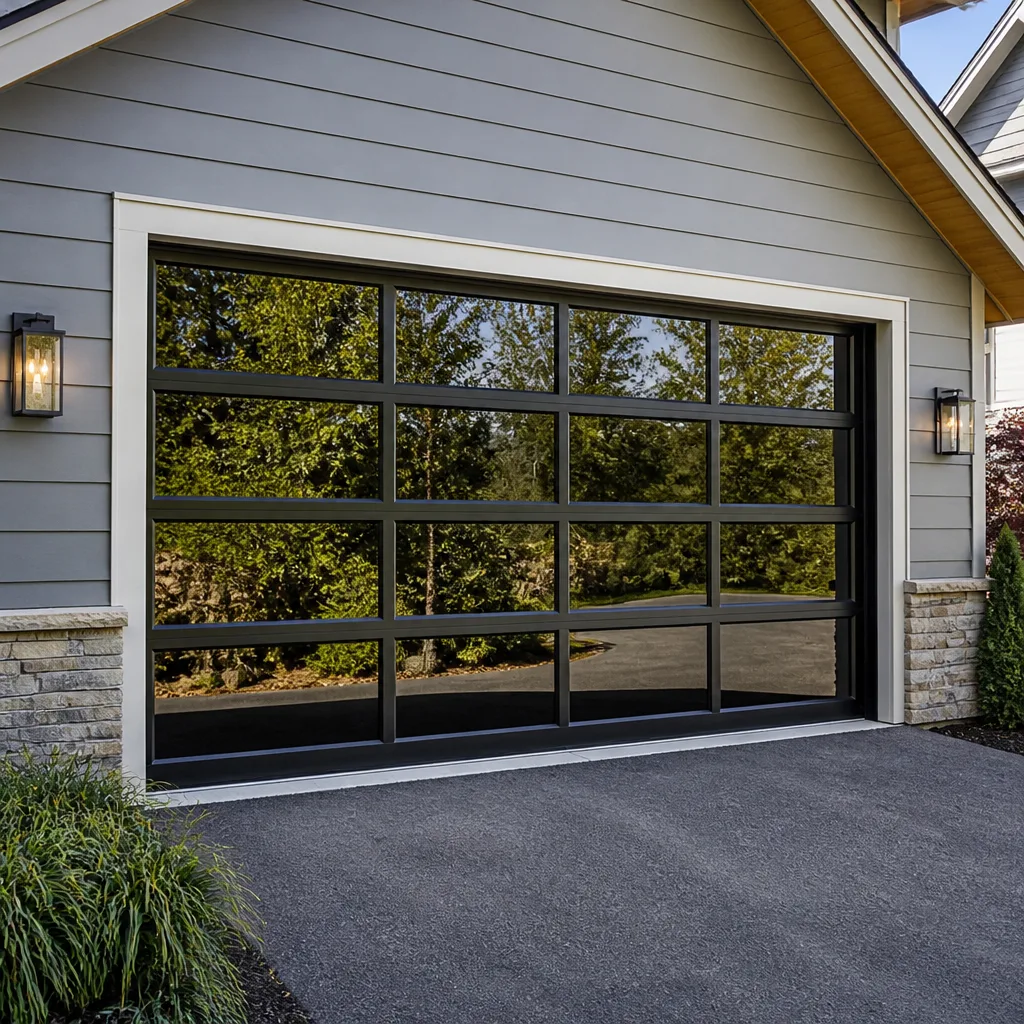 Full-view glass
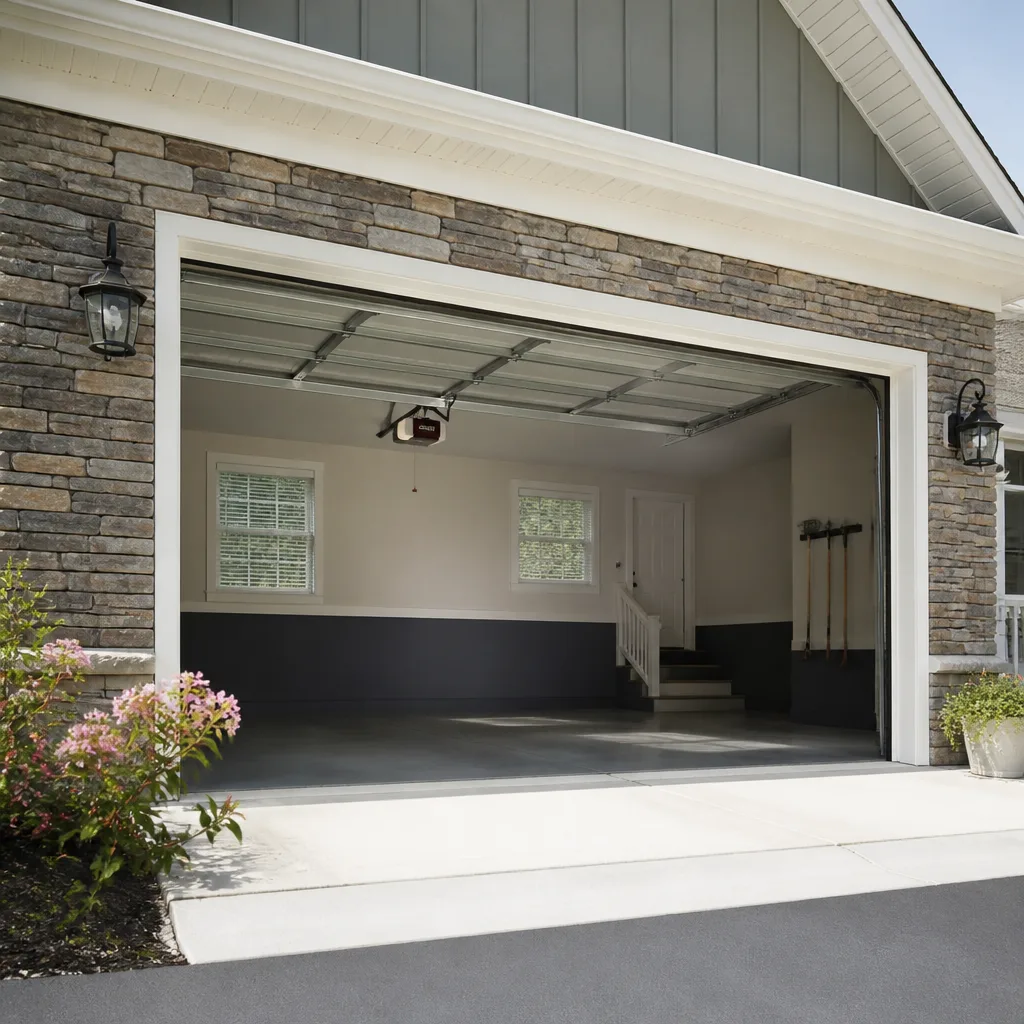 LiftMaster openers
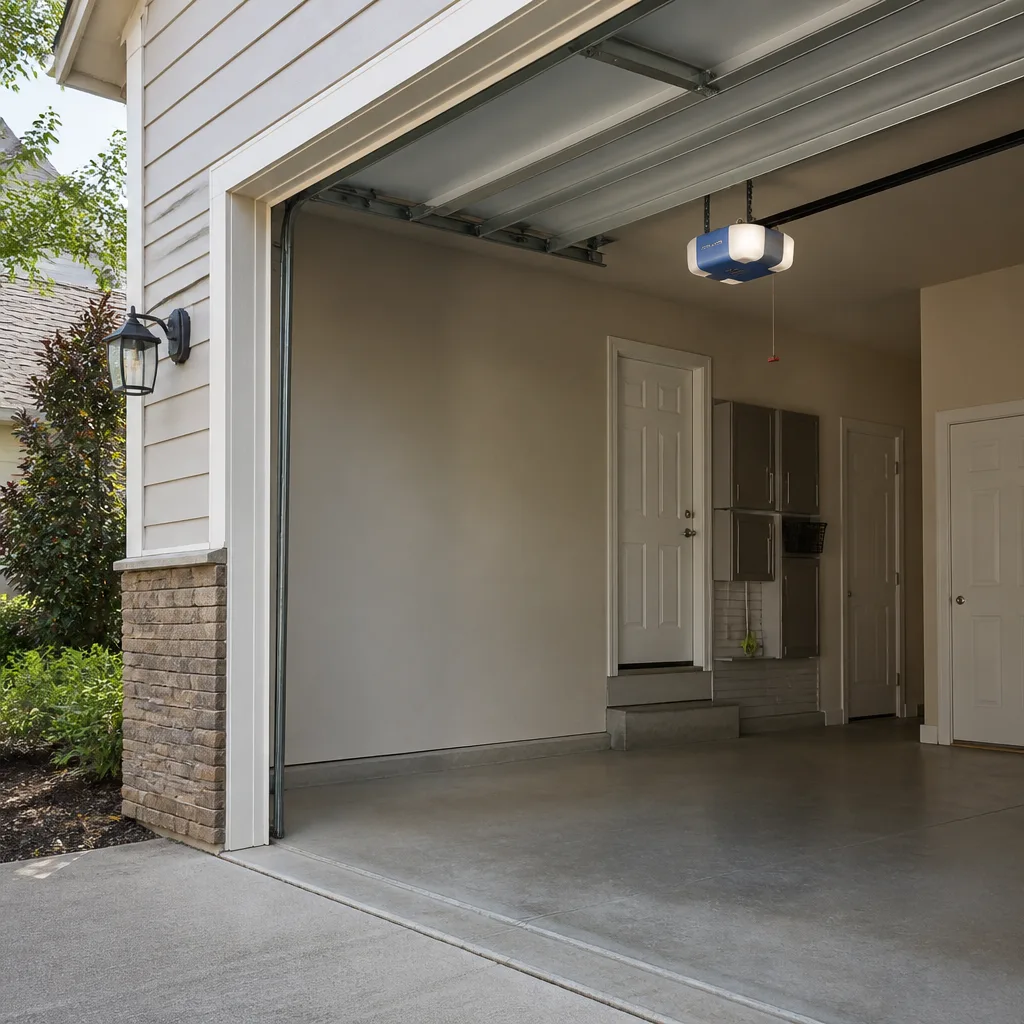 Chamberlain openers
Full 25-point door and opener safety check with every visit - springs, cables, rollers, tracks, and your LiftMaster or Chamberlain opener included
You get a price before we start. It does not change when the pro arrives.
Get your free estimateGarage Door Repair Maintenance Checklist for Lawrence Homeowners
Most garage door problems don’t announce themselves. They build quietly for weeks: a spring that’s lost a little tension, a roller that’s stopped turning freely, a bottom seal that quit sealing last winter. By the time you notice, the repair has grown from a tune-up into an emergency. The most requested repairs at Lawrence Garage Door Repair Co cluster around the same five failure points, and nearly all of them could have been caught two months earlier with the right checklist. This guide walks through each point in the order we actually check them – spring fatigue, roller and hinge lubrication, bottom seal compression, cable drum wear, and the difference between a quick monthly look and a full annual service.
Quick Answer
A solid garage door maintenance checklist for a Lawrence home covers five things on a monthly visual pass and a deeper hands-on service once a year: spring condition, roller and hinge lubrication, bottom seal contact with the floor, cable drum and cable wear, and balance and safety-reverse testing. Plan the heavy lubrication before cold weather sets in, check the bottom seal where the concrete is uneven, and call a professional the moment you see a stretched spring, a frayed cable, or a door that no longer reverses on command.
Styles & brands we work with
- Raised-panel steel
- Carriage house
- Modern flush
- Full-view glass
- LiftMaster openers
- Chamberlain openers
Table of Contents
- The 90-Second Monthly Check
- Spring Fatigue: Catching It Before It Snaps
- Why October Is the Right Month to Lubricate
- Testing Bottom Seal Compression on Uneven Floors
- Cable Drum Wear Indicators Most Homeowners Miss
- The Annual Hands-On Service: What It Covers
- Balance and Safety-Reverse Testing
- Opener Maintenance for the Brands You Own
The 90-Second Monthly Check
A monthly visual check takes about a minute and a half and catches the obvious trouble before it becomes expensive. It’s not a substitute for an annual service, and it’s not meant to be hands-on in any way that puts you near moving parts or tensioned springs. Think of it as a walk-around, done with your eyes and ears from the floor.
Work through these steps once a month, ideally on a day you’re already walking past the door:
- From inside the garage, look at the door in the closed position. Note any gap between the door and the floor, or any daylight showing at the corners.
- Eyeball the springs above the door. You’re looking for rust, a visible gap in a coil, or a spring that looks longer or looser than it did the month before.
- Look at the cables on each side. They should be taut and neatly wound. Any fraying, kinking, or slack is a red flag.
- Run the door up and down once and listen. Grinding, squealing, or popping is worth noting.
- Watch the door travel. It should move smoothly and evenly on both sides – no wobble, no hesitation.
- Test the safety reverse with a small object on the floor (more on this below).
The monthly check catches changes in the door’s behavior over time. In Lawrence, where winters swing between freeze and thaw repeatedly, a door that ran smooth in November can start dragging by February. If a monthly check turns up something that doesn’t feel right, that’s the time for garage door repair rather than waiting for a complete failure.
Spring Fatigue: Catching It Before It Snaps
Torsion springs do most of the lifting on a standard overhead door, and they fail far more often from gradual fatigue than from a single sudden break. In this climate, the cycle between cold nights and warmer days puts a slow, repeated stress on the steel. The spring doesn’t just “give out” one morning – it loses tension over weeks, and the door gets heavier to lift long before the spring actually snaps.
Homeowners rarely notice the change because it happens so gradually. What you can check without touching anything:
- Lift weight. With the door closed and the opener disconnected (if it has a manual release), lift the door by hand about a foot and let it settle. If it feels noticeably heavier than it used to, the spring is losing tension.
- Balance point. Open the door halfway by hand and let it go. A healthy spring holds the door in place. A fatigued one lets it sag or drop.
- Visible condition. A gap in the coil, rust streaks, or a spring that looks stretched out compared to the one beside it are all signs of fatigue.
- Sound. A sharp bang from the garage, even one that doesn’t stop the door from working, is often a spring letting go. Stop using the door if you hear it.
We treat spring work as its own specialty for a reason. Torsion springs are under high tension, and adjusting or replacing one is the single most dangerous job on a garage door. Never try to loosen, tighten, or remove a spring yourself – the stored energy can cause serious injury in an instant. If your visual check turns up any of the fatigue signs, stop operating the door and call for garage door spring repair.
Why October Is the Right Month to Lubricate
Most manufacturer guides say to lubricate the moving parts once a year and leave it at that. In Lawrence, timing matters more than the frequency. The right window is October, before the first hard freeze, when rollers, hinges, and tracks are still free of winter grit and the lubricant has a chance to work into every joint before cold weather sets in.
Here’s why the season matters. Rollers, hinges, and the pivot points on the door panels collect dust and fine grit year-round. In summer that’s mostly an annoyance – a squeak here and there. But once temperatures drop, the grease thickens, and any grit trapped in a roller or hinge turns into a grinding paste that wears the parts faster. A door lubricated in October starts the winter with a clean coat. A door that’s overdue can start the season already stiff, and by February it’s dragging, straining the opener, and making noise that sounds like a much bigger problem than it is.
What to lubricate, and what to leave alone:
- Rollers. A drop of garage door lubricant at the roller stem (the shaft, not the track).
- Hinges. A small amount at each pivot point.
- Bearings and the torsion shaft. Light lubricant at the bearing plates, if you can reach them safely from the floor.
- Never lubricate the tracks themselves, and never grease the springs. Tracks should be wiped clean and dry. Grease on a track attracts grit and eventually causes the door to bind.
If the rollers are already worn flat or the hinges are loose, lubrication won’t fix them. That’s a call for a technician who can check wear against the manufacturer’s tolerances – something we do across eight major brands, from LiftMaster and Chamberlain to Raynor and Craftsman.
Testing Bottom Seal Compression on Uneven Floors
Older Lawrence garages almost always have concrete slabs that have settled, cracked, or poured slightly off-level. That unevenness is exactly where the bottom seal fails first. The seal is a rubber or vinyl strip along the bottom of the door, and its job is to press against the floor and block out drafts, water, pests, and cold air. If the floor dips or rises under any part of the door, the seal can’t make full contact there – and the gap grows with every freeze-thaw cycle.
Here’s the simple test. With the door closed, walk the length of it on the inside with a flashlight. Look for any point where you can see daylight under the seal, or where a sheet of paper slides under easily. Then run your hand (carefully, at floor level, not near moving parts) along the seal to feel whether it’s making firm contact across the full width.
Two things this test reveals:
- A worn or flattened seal. Rubber hardens with age and cold, and a stiff seal that used to compress no longer does. Replacing the seal is a straightforward fix that restores the barrier.
- An uneven floor. If the seal is in good shape but there’s still a gap, the floor itself is out of level at that spot. A technician can recommend a seal with more give, or adjust the door travel and threshold so the seal seats properly.
A seal that doesn’t seal is more than a draft problem. It’s also the spot where water gets in, which in a Lawrence winter means ice forming under the door and a much harder door to open the next morning.
Cable Drum Wear Indicators Most Homeowners Miss
Cable drums are the aluminum or steel spools at each end of the torsion shaft that the lift cables wind around. Most homeowners have never been told to look at them, and that’s a problem – because a worn drum is a common cause of a door that runs crooked or a cable that jumps its track.
The indicators to watch for, from the floor and without touching anything:
- A groove worn into the drum. The cable rides in a spiral groove on the drum. Over time, that groove can wear deeper or uneven. A drum with a visible rut or a chewed edge is worn.
- Fraying at the cable end. Where the cable meets the drum, look for broken strands or a rough, hairy appearance. That’s a cable on its way out.
- Cable winding unevenly. The cable should wind smoothly and stay in its groove. If it’s crossed over itself or bunched on one side, the drum or the alignment has a problem.
- A crooked door. If the door lifts with one side ahead of the other, or the gap at the top is uneven, the cables and drums are the first place a technician checks.
Cables and drums are under the same high tension as the springs. A snapped cable can whip with serious force, so never try to re-seat a cable or adjust a drum yourself. If you see any of the wear signs above, park the car outside and schedule a professional inspection. Our team inspects drums and cables as part of every repair call, and it’s the kind of detail that keeps a small issue from turning into a snapped-cable emergency.
The Annual Hands-On Service: What It Covers
A monthly visual check catches what you can see from the floor. An annual service goes further, into the parts you can’t safely inspect yourself and the adjustments most homeowners shouldn’t attempt. Here’s what a proper hands-on service covers, in the order a technician works through it:
- Full cycle test: run the door several times and observe travel, balance, and any binding.
- Spring check: measure tension, inspect for fatigue and wear, and flag any spring that’s near the end of its safe cycle life.
- Cable and drum inspection: check windings, look for fraying, and confirm smooth travel on both sides.
- Roller and hinge assessment: check for flat spots, loose hinges, and worn bearing plates, replacing as needed.
- Track alignment: confirm the door runs square in the tracks and adjust any bent or out-of-line sections.
- Bottom seal and threshold: confirm full compression and flag uneven floor spots.
- Safety-reverse and force-limit testing: verify the opener reverses on contact and that the force settings match the door’s actual weight.
- Lubrication: apply fresh lubricant at all the right points and wipe down the tracks.
For a Lawrence home, the annual service usually belongs either just before or just after winter. Pre-winter gets everything set for the cold; post-winter catches the wear the season left behind. Either window works – the point is to do it once a year, not wait until something breaks.
Balance and Safety-Reverse Testing
These two tests are the ones that matter most for safety, and they’re the ones homeowners overlook because they seem technical. They’re actually simple.
Balance test. Disconnect the opener with the manual release. Lift the door by hand to about halfway and let it go. A balanced door holds itself roughly in place. A door that slams down or creeps up under its own weight is out of balance, which means the springs and cables are no longer doing their jobs evenly. Don’t keep using a door that fails this test – it’s putting extra load on the opener and increasing the risk of a sudden failure.
Safety-reverse test. With the door open, place a small object (a rolled-up towel or a 2×4 laid flat) on the floor directly under the door. Close the door using the opener. It should reverse immediately on contact and return to open. If it stops on the object or keeps pushing, the opener’s force settings or sensors need attention. Test this once a month, and always after any adjustment or repair.
If the door fails either test, that’s a genuine safety issue. A technician can rebalance the door and recalibrate the opener quickly. This is also a common moment when problems with the garage door opener repair itself show up, since the reverse function depends on the opener’s force settings and the sensor eyes.
Opener Maintenance for the Brands You Own
The opener is the part of the system most homeowners interact with every day, and it’s also the part where brand-specific maintenance matters. LiftMaster and Chamberlain units use different force-sensitivity settings than Genie or Craftsman openers, and the chain, belt, or screw-drive assembly on each brand wears differently. What works as routine care on one can be the wrong adjustment on another, which is why a brand-agnostic check matters more than a generic tune-up.
A few things to do for any opener, regardless of brand:
- Clear the safety sensors. Wipe the lenses at the bottom of each side of the door and make sure nothing (a stored box, a leaning rake) blocks the invisible beam.
- Listen to the drive. A belt or chain that’s too loose will rattle; too tight and it strains the motor. A technician can check tension in a minute.
- Check the wall control and remotes. Replace batteries yearly, and confirm the wall button works reliably.
- Look at the manual release. Test the emergency release once a year to make sure it engages and disengages smoothly – the one time you need it, you want it to work.
If your opener is acting up (running but not lifting, stopping mid-travel, or failing to reverse), call for a proper diagnosis rather than replacing parts by guess. We work on LiftMaster, Chamberlain, Genie, Clopay, Amarr, Wayne Dalton, Craftsman, and Raynor – so the door you already own is the door we know how to service.
Common Mistakes to Avoid
- Waiting for the spring to snap before calling. A fatigued spring is heavier and quieter than a broken one, which is why homeowners miss it. Check the lift weight and balance monthly and get ahead of it.
- Lubricating the tracks and springs. Grease on a track collects grit and eventually grinds the rollers; it also does nothing for springs. Stick to rollers, hinges, and bearings.
- Testing the safety reverse with your hand or body. Use a small object on the floor, never a person. The reverse function is meant to work on contact, and testing it the wrong way is how people get hurt.
- Ignoring a door that runs crooked. A door with one side ahead of the other is a cable or drum problem, not a “it’s just a little off” nuisance. It gets worse and more expensive if left alone.
- Adjusting the opener force settings to make a heavy door move. If the door feels heavy, the springs are the issue – turning up the opener’s force just strains the motor and masks the real problem.
- Patching a worn bottom seal with a foam strip. A temporary patch doesn’t restore compression on an uneven Lawrence floor and won’t survive the next freeze. Replace the seal properly.
- Trying to adjust or remove a spring or cable yourself. These are under extreme tension. Any work on them belongs with a trained technician.
See the difference
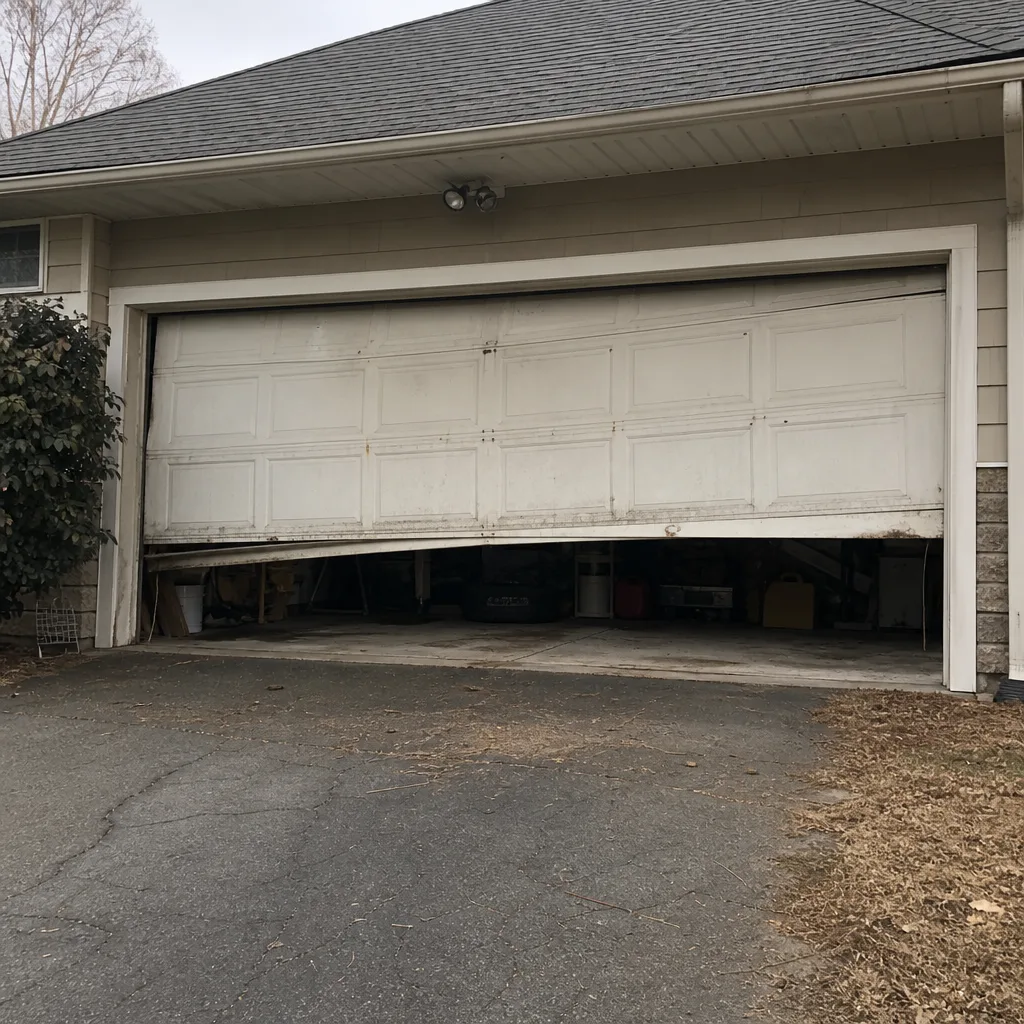 Before
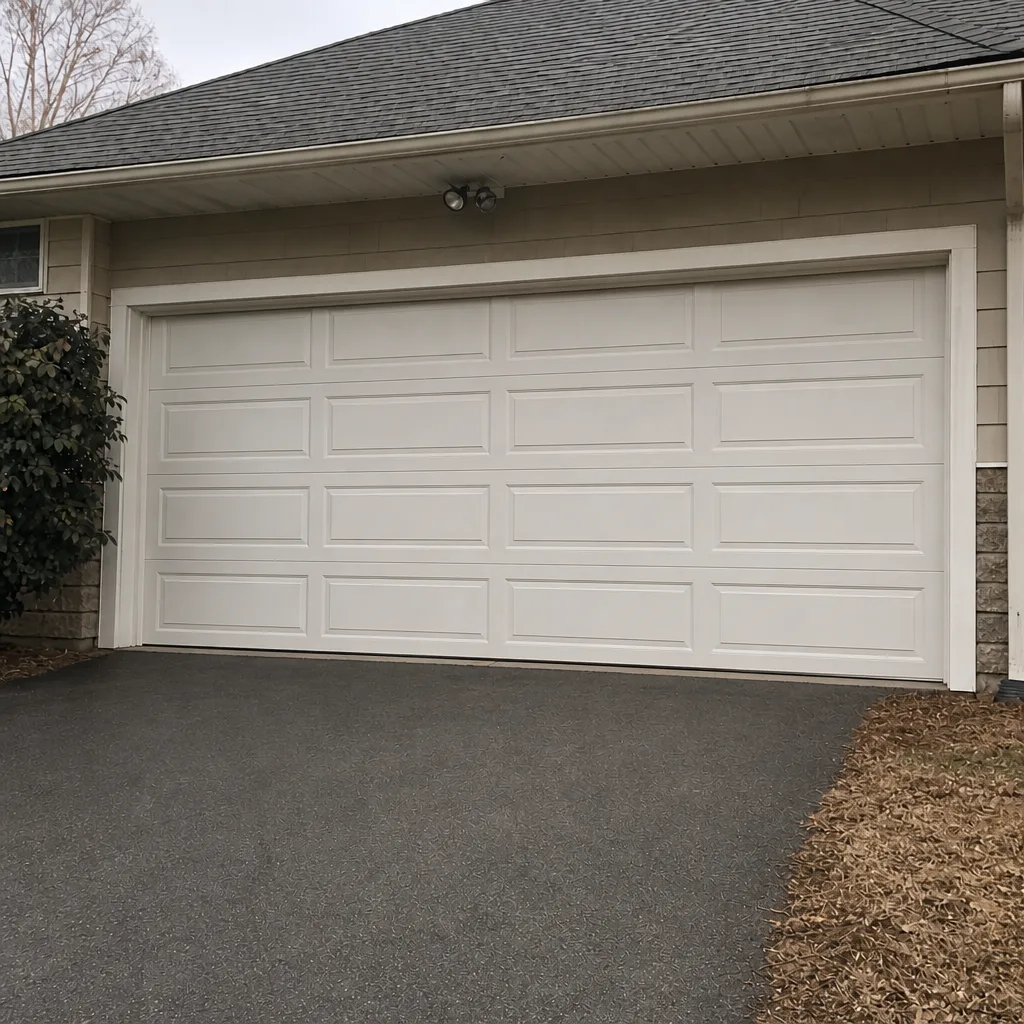 After
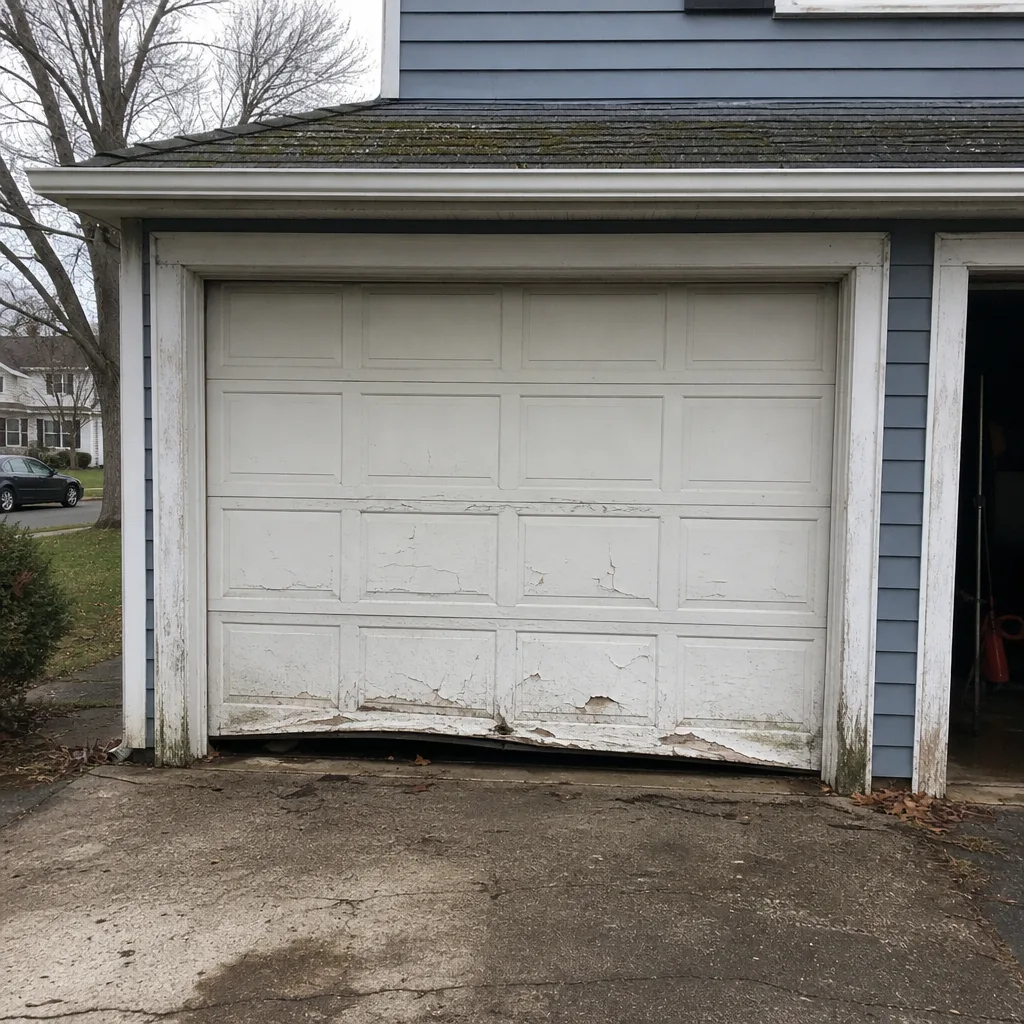 Before
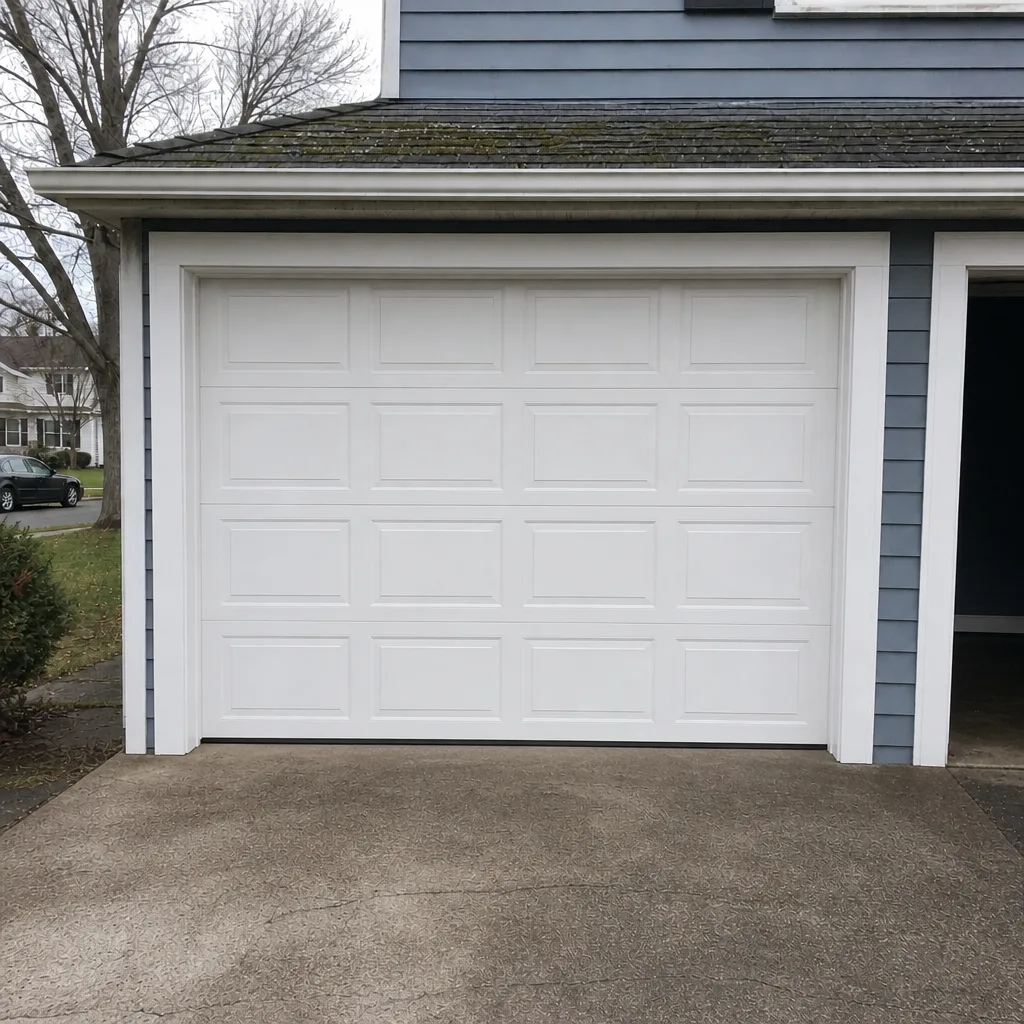 After
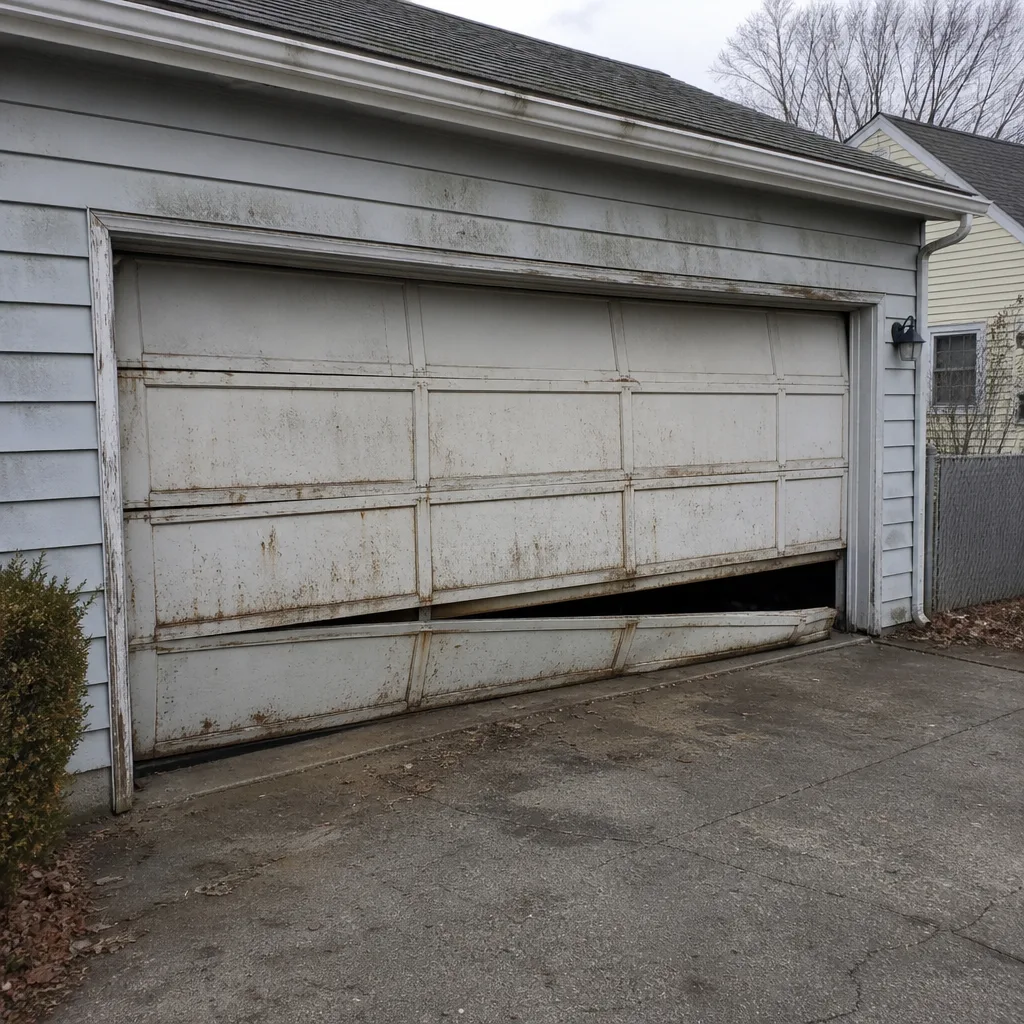 Before
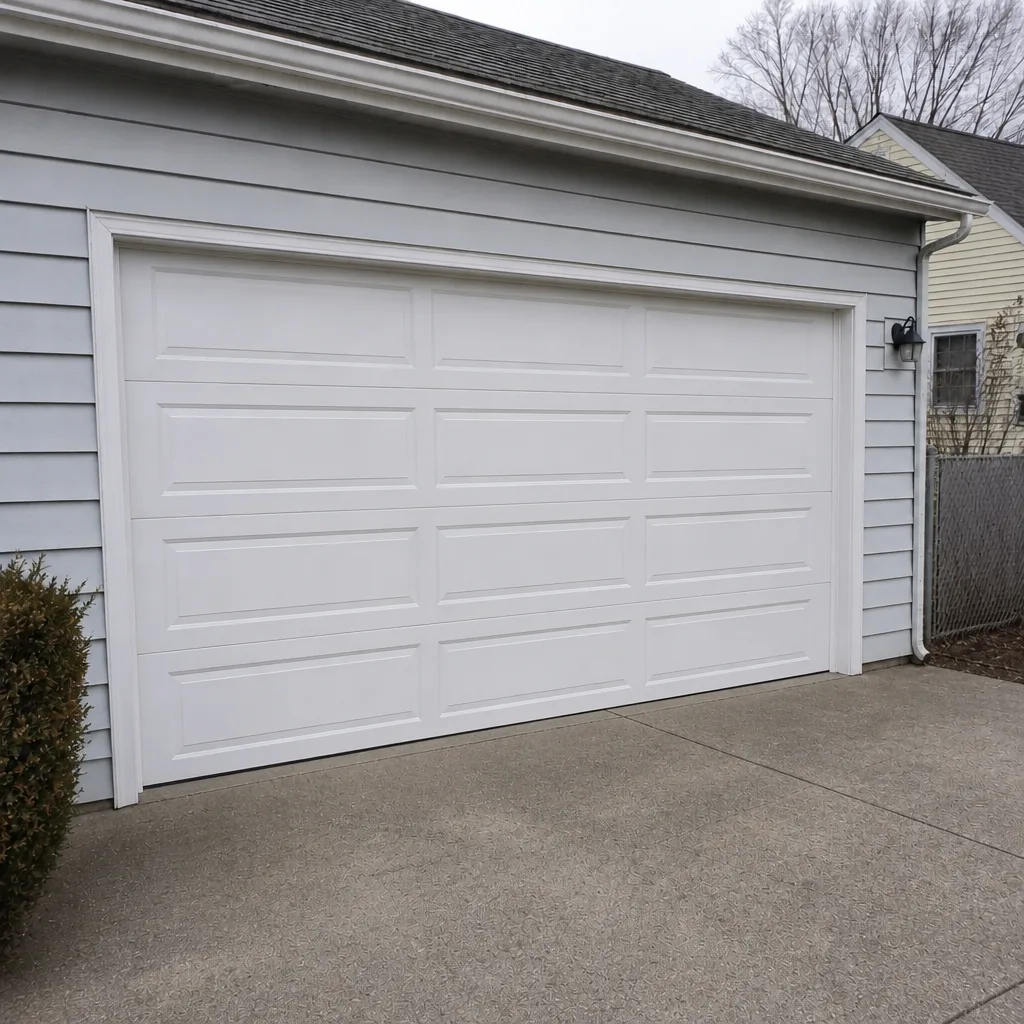 After
When to Call a Professional
Some of the checklist above is yours to do safely – the monthly walk-around, the visual checks, the lubrication timing. But a handful of situations are a stop-and-call moment: a snapped or visibly fatigued spring, a frayed or jumped cable, a door that fails the balance or safety-reverse test, a drum that shows wear, or a door that’s become difficult to lift by hand. In Lawrence, we also see plenty of doors that were overdue for a service and then failed in the middle of a cold snap, when the whole system was already strained. Our technicians have up to 15 years of experience, and we can handle everything from a single spring to a full replacement. Lawrence Garage Door Repair Co offers free estimates in Lawrence – call (877) 492-1952 and we’ll get you scheduled.
Frequently Asked Questions
Once a year for a full hands-on service, plus a quick visual check each month. In Lawrence’s freeze-thaw winters, the annual service is best done either just before or just after cold season, so any wear from the cold gets caught before it turns into a repair. If the door gets heavy use, or it’s older, twice a year is worth considering.
Yes, at the rollers, hinges, and bearing points, using a proper garage door lubricant. Don’t lubricate the tracks or the springs, and don’t put yourself anywhere near the moving door while doing it. If you’re not sure which parts are safe to touch, a technician can walk you through it during a service. Call (877) 492-1952 if you’d rather have it done.
A door that suddenly feels heavy to lift by hand, or that won’t hold itself at the halfway point when you let it go. That gradual loss of tension is the most common warning sign that a spring is fatiguing, and it’s exactly what the monthly balance test catches. Stop operating the door and call for garage door spring repair.
Because the floor under it is uneven. Many older Lawrence garages have concrete that’s settled or cracked, so the seal can’t compress everywhere. The seal itself might be in good shape, but the floor still leaves a gap. A seal with more give, or a threshold adjustment, usually solves it – a technician can confirm during an estimate.
For many repairs, yes – especially springs, cables, and openers. We offer emergency garage door service because a door that won’t open or won’t close can’t wait for a scheduled visit. The price is agreed in writing before any work starts, so there are no surprises. Call (877) 492-1952 to see what’s available.
Stop using it and get it checked. A door that doesn’t reverse on contact is a real hazard, and the fix is usually a force-setting or sensor adjustment rather than a major repair. It’s part of every service we do, and it’s the one test worth doing every single month in between. Call (877) 492-1952 for a free estimate.
The Bottom Line
The checklist that actually keeps a Lawrence garage door working is built around the failures that show up in this climate and this housing stock: fatigue in the springs, grit in the rollers before winter, uneven concrete under the bottom seal, and wear on the drums and cables most people never look at. The monthly check is a minute and a half of eyes and ears from the floor; the annual service is the hands-on version, and both are worth the time. Do the things you can do safely, watch the parts that fail slowly, and call a professional the moment something looks off. The right fix costs less than an emergency, every time.
If you’d rather have a trained eye on it, we’re here. Our technicians have up to 15 years of experience across all eight brands, and the price is agreed before any work begins. Call Lawrence Garage Door Repair Co at (877) 492-1952 for a free estimate in Lawrence.
Written by the team at Lawrence Garage Door Repair Co.